
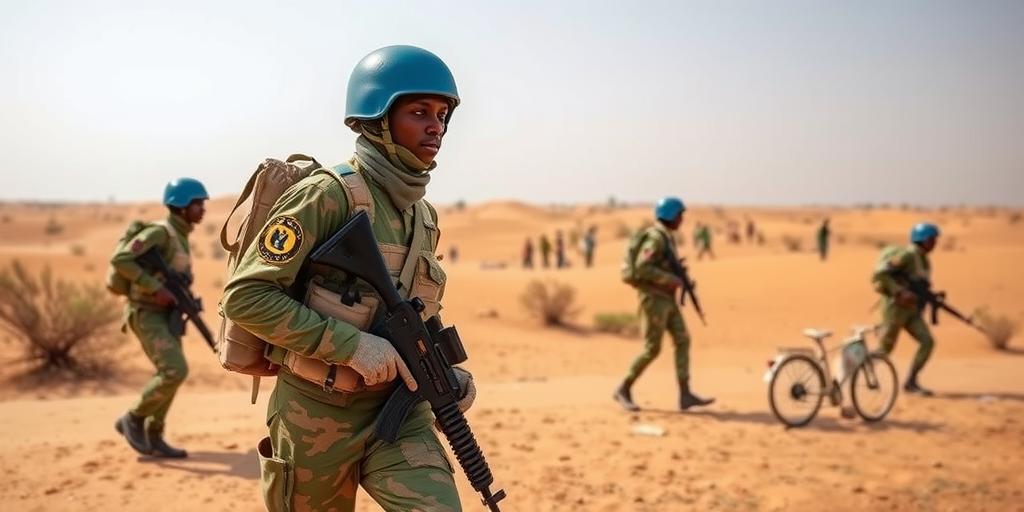
The United Nations Multidimensional Integrated Stabilization Mission in Mali (MINUSMA) was established in 2013 to support the country's political processes and carry out security-related tasks. However, after a decade of operations, the mission officially ended on December 31, 2023. This withdrawal marks a significant shift in the international approach to the Malian crisis, prompting a closer examination of the challenges faced by MINUSMA and the reasons that led to its departure.
Challenges Faced by MINUSMA
MINUSMA faced numerous challenges throughout its tenure, hindering its effectiveness and ultimately contributing to the decision to withdraw:
- Security Environment: Mali's security situation remained volatile, with persistent threats from various armed groups, including jihadist organizations. MINUSMA peacekeepers frequently faced attacks, making it one of the UN's deadliest missions.
- Political Instability: The Malian government experienced political instability, including coups in 2020 and 2021, which complicated MINUSMA's mandate and strained relations with the host government.
- Limited Cooperation: Cooperation between MINUSMA and the Malian authorities deteriorated over time, with increasing restrictions placed on the mission's movements and operations. This lack of collaboration undermined MINUSMA's ability to implement its mandate effectively.
- Human Rights Concerns: Allegations of human rights abuses by both armed groups and government forces further complicated MINUSMA's role. The mission struggled to protect civilians and ensure accountability for human rights violations.
Reasons for Withdrawal
The decision to withdraw MINUSMA was driven by a combination of factors:
- Malian Government's Request: The Malian government formally requested the withdrawal of MINUSMA, citing concerns about the mission's effectiveness and interference in internal affairs. This request reflected a growing frustration with the UN's presence in the country.
- Lack of Progress: Despite years of operations, MINUSMA struggled to achieve its core objectives of stabilizing the country, protecting civilians, and supporting the peace process. The persistent insecurity and political instability raised questions about the mission's impact.
- Evolving Geopolitical Landscape: The geopolitical context in the Sahel region has been evolving, with increasing involvement of other actors, such as Russia's Wagner Group. This shift has altered the dynamics of the Malian crisis and influenced the decision to withdraw MINUSMA.
Implications of the Withdrawal
The withdrawal of MINUSMA has significant implications for Mali and the broader region:
- Security Vacuum: The departure of UN peacekeepers raises concerns about a potential security vacuum, which could be exploited by armed groups. The Malian government will need to strengthen its own security forces to fill this gap.
- Humanitarian Crisis: The humanitarian situation in Mali remains dire, with millions of people in need of assistance. The withdrawal of MINUSMA could further complicate humanitarian efforts and exacerbate the crisis.
- Regional Stability: The Malian crisis has implications for regional stability, particularly in the Sahel region. The withdrawal of MINUSMA could embolden armed groups and contribute to further instability in neighboring countries.
The end of MINUSMA's mission in Mali marks a turning point in the international response to the country's crisis. As Mali navigates this new chapter, it will be crucial to address the underlying challenges that have fueled conflict and instability. The Malian government, with support from regional and international partners, must prioritize security sector reform, good governance, and inclusive dialogue to pave the way for a more peaceful and prosperous future.


