
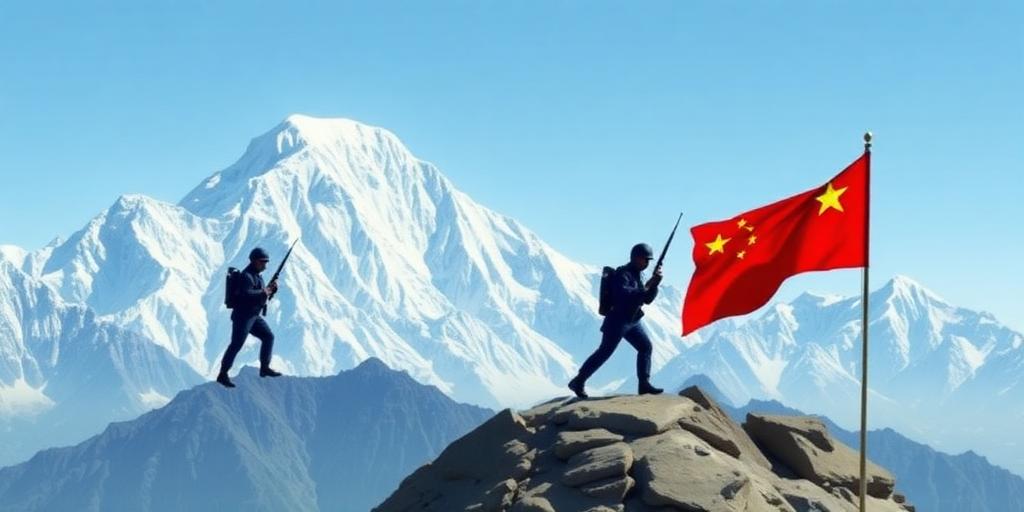
The Sino-Indian War of 1962 remains a pivotal event that continues to shape the geopolitical landscape of the Himalayan region. This conflict, though brief, had profound and lasting consequences for both India and China, as well as for the broader dynamics of South Asia.
Historical Context The seeds of the Sino-Indian War were sown in the complex boundary disputes that arose following India's independence in 1947 and the establishment of the People's Republic of China in 1949. The primary points of contention were the Aksai Chin region and the McMahon Line. Aksai Chin, a strategically important area in the eastern part of Ladakh, was claimed by both countries. The McMahon Line, demarcated in 1914, defined the eastern sector of the border but was rejected by China.
Tensions escalated in the late 1950s as both countries undertook road construction in the disputed territories. Skirmishes became more frequent, culminating in a full-scale war in October 1962.
The War The war was fought in two main sectors: the eastern sector along the McMahon Line and the western sector in Aksai Chin. The Chinese People's Liberation Army (PLA) launched simultaneous offensives in both regions. The Indian Army, ill-equipped and unprepared for the harsh conditions of high-altitude warfare, suffered significant losses.
The PLA quickly gained control of large swathes of territory in both sectors. In November 1962, China declared a unilateral ceasefire and withdrew its forces to positions behind its claimed lines, retaining control of Aksai Chin.
Impact on Himalayan Geopolitics The Sino-Indian War had far-reaching implications for the geopolitics of the Himalayan region:
- Border Disputes: The war solidified China's control over Aksai Chin, a strategic region that provides a vital link between Tibet and Xinjiang. The border dispute remains unresolved, and numerous rounds of diplomatic talks have failed to produce a breakthrough.
- India's Strategic Reorientation: The defeat in 1962 led to a significant reorientation of India's defense policy. India embarked on a major military modernization program, focusing on improving its capabilities in high-altitude warfare. The war also prompted India to seek closer ties with other countries, including the United States and the Soviet Union.
- Regional Power Dynamics: The war altered the balance of power in South Asia. China's victory enhanced its regional standing, while India's defeat dented its image. Pakistan, taking advantage of India's weakened position, moved closer to China, leading to a strategic alliance that has persisted for decades.
- Impact on Himalayan States: The war had a direct impact on the Himalayan states of Nepal and Bhutan. Both countries were compelled to recalibrate their relationships with India and China. Nepal sought to maintain a neutral stance, while Bhutan remained closely aligned with India but also engaged in dialogue with China.
Enduring Legacy The Sino-Indian War of 1962 continues to cast a long shadow over the Himalayan region. The unresolved border dispute remains a potential flashpoint, and tensions occasionally flare up, as seen in the recent clashes in Galwan Valley in 2020. The war has shaped the strategic calculus of India and China, influencing their defense policies, foreign relations, and regional ambitions.
Understanding the historical context and the enduring legacy of the 1962 war is crucial for comprehending the complex geopolitical dynamics of the Himalayan region. The war serves as a reminder of the importance of peaceful resolution of disputes and the need for sustained dialogue to prevent future conflicts.


