
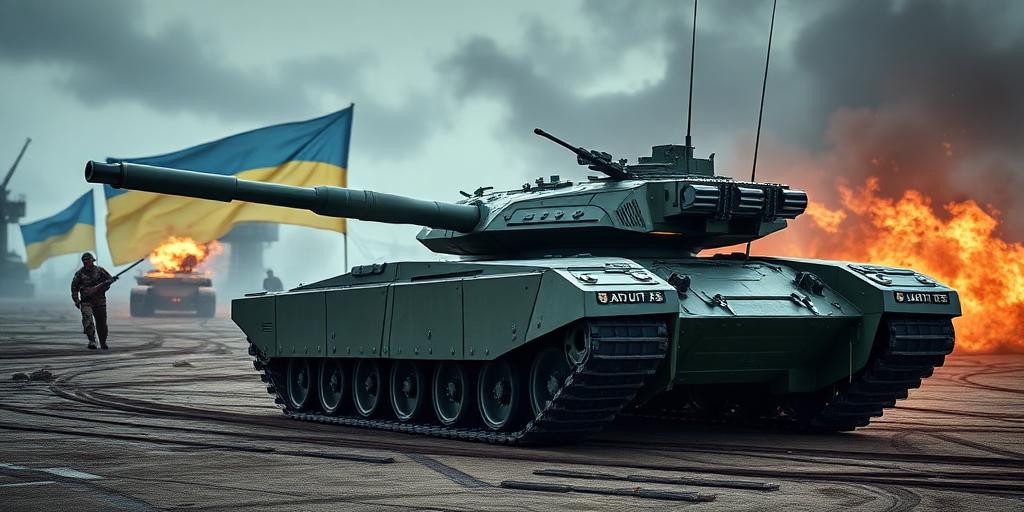
Russia's T-14 Armata Tank: Reality vs. Hype After Ukraine
The T-14 Armata has been touted as Russia's next-generation main battle tank, designed to outperform Western counterparts like the Abrams and Leopard. However, its actual performance and impact, especially in light of the ongoing conflict in Ukraine, warrant a closer examination.
Development and Features
First unveiled in 2015, the T-14 boasts several advanced features:
- Unmanned Turret: The crew is housed in a protected capsule in the hull, enhancing survivability.
- 125mm Smoothbore Gun: Designed for improved accuracy and firepower.
- Active Protection System (APS): The Afghanit APS is intended to intercept incoming anti-tank missiles and projectiles.
- Advanced Sensors and Digital Systems: Supposedly offering superior situational awareness.
Claims vs. Reality
While the T-14's specifications look impressive on paper, numerous challenges have plagued its development and deployment:
- Production Delays: Mass production has been repeatedly delayed due to technological and financial constraints.
- High Cost: The T-14 is significantly more expensive than existing Russian tanks, limiting procurement.
- Unproven Performance: Its performance in real combat situations remains largely unverified.
The Ukraine Factor
The war in Ukraine has exposed several weaknesses in the Russian military, and the T-14's absence from the battlefield is telling. Reasons for its non-deployment likely include:
- Reliability Issues: The tank may not be ready for the rigors of modern warfare.
- Fear of Capture: Russia may be hesitant to risk its advanced technology falling into enemy hands.
- Logistical Challenges: Maintaining and supporting a new tank platform would strain already stretched supply lines.
Impact and Future
The T-14 Armata's future remains uncertain. While it represents a step forward in Russian tank design, its high cost, production delays, and unproven performance raise questions about its viability.
- Limited Numbers: Even if production ramps up, the T-14 is unlikely to replace the bulk of Russia's aging tank fleet.
- Export Prospects: Potential foreign buyers may be deterred by the tank's cost and lack of combat experience.
- Technological Advancement: The T-14 may spur further development of tank technology, both in Russia and the West.
In conclusion, the T-14 Armata remains more of a symbol of Russian military ambition than a game-changing weapon system. Its impact on the battlefield, particularly in the context of the Ukraine war, has been minimal, and its future remains clouded by technical, economic, and strategic challenges.


