
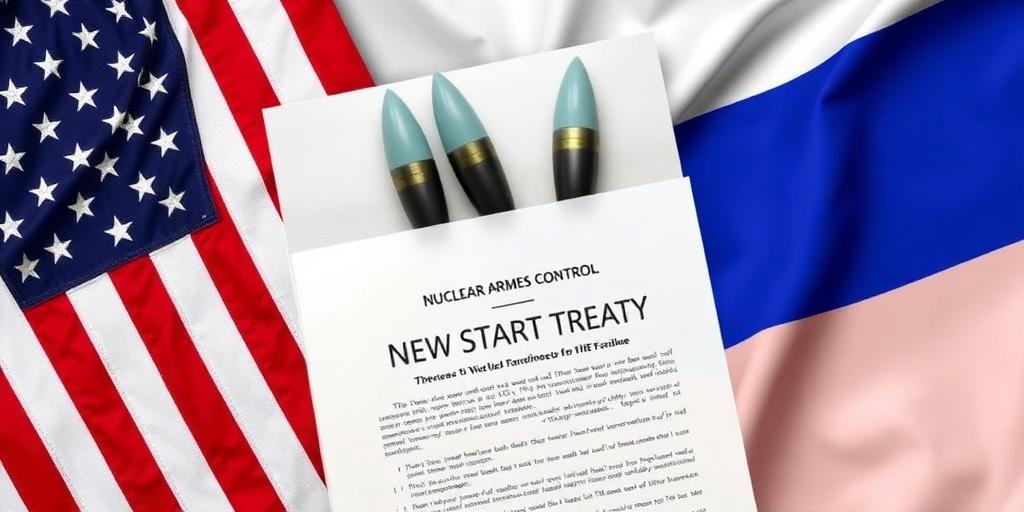
The New START Treaty: Is US-Russia Arms Control Over?
Introduction
The New Strategic Arms Reduction Treaty (New START) is a nuclear arms treaty between the United States and the Russian Federation. It limits the number of deployed strategic nuclear warheads and delivery systems. With growing tensions between the U.S. and Russia, the future of arms control is uncertain.
Background of the New START Treaty
Signed in 2010, the New START Treaty aimed to reduce and limit strategic offensive arms. It set verifiable limits on the number of nuclear warheads, intercontinental ballistic missiles (ICBMs), submarine-launched ballistic missiles (SLBMs), and heavy bombers. Both nations were required to reduce their arsenals within these set limits.
Key Provisions of the Treaty
The treaty included:
- Limits on Warheads: Each party is limited to 1,550 deployed strategic nuclear warheads.
- Limits on Delivery Systems: Each party is limited to 700 deployed ICBMs, SLBMs, and heavy bombers.
- Verification Measures: The treaty includes verification measures, such as data exchanges and on-site inspections.
Current Status and Challenges
Originally set to expire in 2021, the treaty was extended to 2026. However, recent geopolitical tensions and Russia's suspension of inspection activities have raised concerns about the treaty's future. Discussions on a new arms control framework have been stalled.
Implications of the Treaty's Potential Demise
If the New START Treaty collapses, the implications could be significant:
- Unrestrained Nuclear Buildup: Without treaty limits, both nations could engage in a nuclear arms race.
- Increased Global Instability: The lack of verifiable arms control measures increases uncertainty and mistrust.
- Impact on International Relations: The collapse could further strain already tense relations between the U.S. and Russia.
Expert Opinions
Many experts believe that the New START Treaty provides crucial stability and transparency. They emphasize the importance of maintaining dialogue and seeking new arms control agreements to reduce nuclear risks.
Conclusion
The New START Treaty is a critical component of international security. Its uncertain future presents significant challenges for arms control and global stability. Continued dialogue and commitment to arms control principles are essential to avoid a new era of nuclear competition.


