
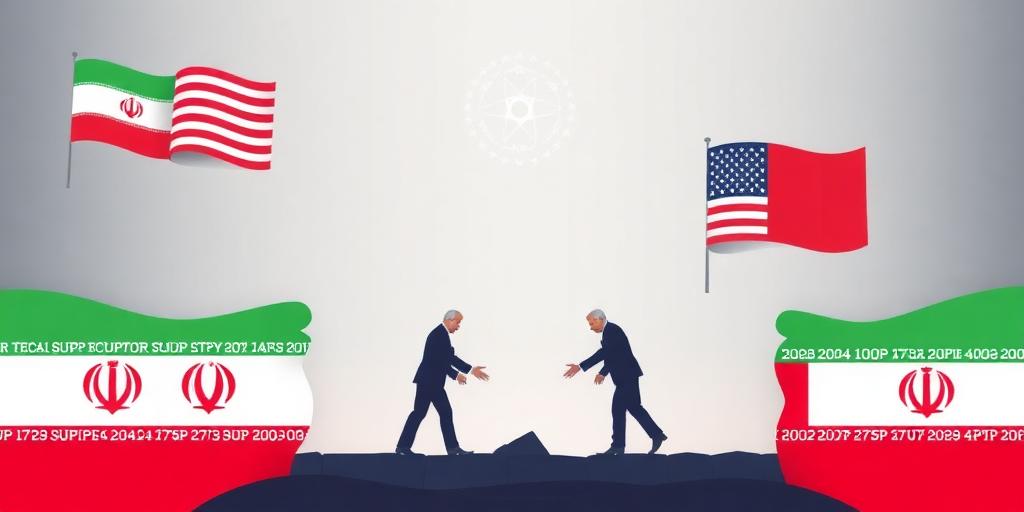
The Iran Nuclear Deal (JCPOA): Can It Be Revived or Is It Dead?
The Iran Nuclear Deal, formally known as the Joint Comprehensive Plan of Action (JCPOA), has been a subject of intense international debate and diplomatic maneuvering since its inception. This article provides an informative overview of the JCPOA, its history, the reasons for its near collapse, and the prospects for its potential revival.
What is the JCPOA?
The JCPOA is an agreement reached in 2015 between Iran and the P5+1 (the five permanent members of the United Nations Security Council—China, France, Russia, the United Kingdom, and the United States—plus Germany) and the European Union. Under the deal, Iran agreed to limit its nuclear program in exchange for relief from economic sanctions.
Key components of the JCPOA included:
- Restrictions on Uranium Enrichment: Iran committed to limiting its uranium enrichment levels and the number of centrifuges in operation.
- Inspections: The International Atomic Energy Agency (IAEA) was granted access to inspect Iranian nuclear facilities to ensure compliance.
- Sanctions Relief: In return for compliance, Iran received relief from international sanctions that had crippled its economy.
Historical Context
The JCPOA was the culmination of years of diplomatic efforts aimed at preventing Iran from developing nuclear weapons. Concerns about Iran's nuclear ambitions grew in the early 2000s, leading to escalating tensions and international sanctions. The election of Hassan Rouhani as Iran's president in 2013, who advocated for engagement with the West, paved the way for serious negotiations.
The U.S. Withdrawal
In May 2018, the United States, under the Trump administration, unilaterally withdrew from the JCPOA. The administration argued that the deal was flawed and did not adequately address Iran's ballistic missile program or its regional behavior. Following the withdrawal, the U.S. reimposed sanctions on Iran, leading to a severe economic downturn.
Iran's Response
In response to the U.S. withdrawal and the reimposition of sanctions, Iran began to gradually roll back its commitments under the JCPOA. This included increasing uranium enrichment levels beyond the limits set by the deal and expanding its centrifuge operations. These actions heightened concerns among the remaining parties to the agreement and the international community.
Efforts to Revive the JCPOA
Since 2021, efforts have been underway to revive the JCPOA. The Biden administration has expressed willingness to rejoin the deal if Iran returns to full compliance. Several rounds of negotiations have taken place in Vienna, mediated by the European Union, with the participation of the remaining parties to the agreement. However, these negotiations have faced numerous obstacles, including disagreements over sanctions relief and guarantees that the U.S. will not withdraw from the deal again.
Obstacles to Revival
Several factors complicate the prospects for reviving the JCPOA:
- Trust Deficit: The U.S. withdrawal has created a deep trust deficit between Iran and the United States.
- Sanctions Relief: Iran is seeking comprehensive sanctions relief, including guarantees that sanctions will not be reimposed in the future. The U.S. is hesitant to provide such guarantees.
- Nuclear Advances: Iran has made significant advances in its nuclear program since the U.S. withdrawal, making it more difficult to return to the original terms of the JCPOA.
- Regional Tensions: Heightened tensions in the Middle East, including conflicts in Yemen and Syria, further complicate diplomatic efforts.
Alternative Scenarios
If the JCPOA cannot be revived, several alternative scenarios could unfold:
- Escalation: Without the JCPOA, tensions could escalate, potentially leading to military confrontation.
- Nuclear Proliferation: Other countries in the region may feel compelled to develop their own nuclear capabilities.
- Continued Sanctions: Iran would continue to face economic sanctions, further destabilizing the country and the region.
Conclusion
The future of the Iran Nuclear Deal remains uncertain. While efforts to revive the JCPOA are ongoing, significant obstacles remain. The stakes are high, as the failure to reach an agreement could have far-reaching consequences for regional and global security. Whether the JCPOA can be brought back to life or is destined to become a relic of diplomatic history will depend on the willingness of all parties to compromise and find common ground.


