
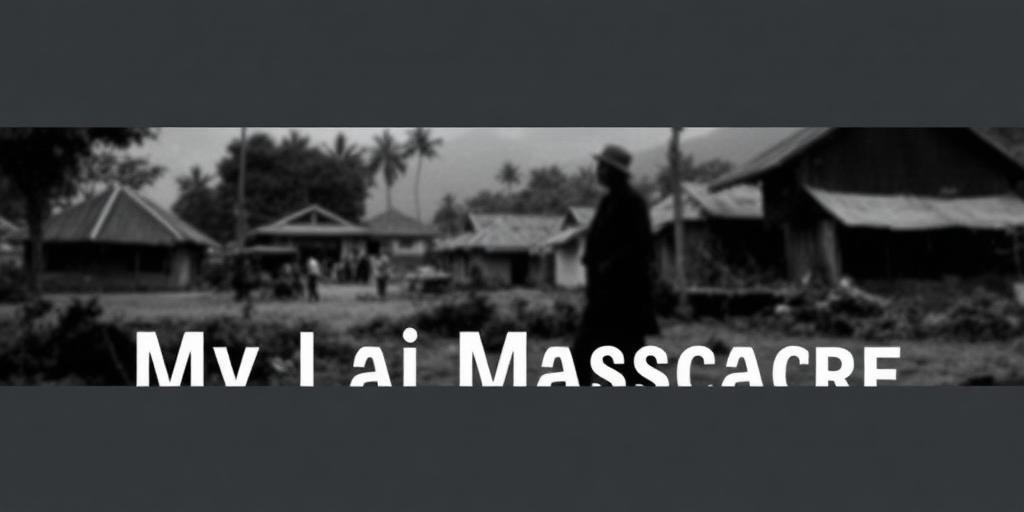
The My Lai Massacre, a harrowing event during the Vietnam War, remains a stark reminder of the atrocities that can occur in times of conflict. On March 16, 1968, U.S. Army soldiers from Charlie Company, 1st Battalion, 20th Infantry Regiment, 11th Brigade, entered the South Vietnamese hamlet of My Lai 4, also known as Song My. What followed was the systematic killing of hundreds of unarmed civilians, primarily women, children, and elderly men.
What Happened at My Lai?
Charlie Company, under the command of Captain Ernest Medina, had been operating in an area believed to be a Viet Cong stronghold. Intelligence suggested that the villagers of My Lai were harboring Viet Cong fighters. However, upon entering the village, no enemy combatants were found. Despite this, the soldiers began a brutal assault on the villagers. Soldiers methodically went through the village, killing civilians in their homes, rice paddies, and communal areas. Women were raped, bodies were mutilated, and the village was set ablaze. The exact number of casualties remains disputed, but estimates range from 347 to 504 unarmed civilians.
The Cover-Up and Investigation
The My Lai Massacre was initially covered up by the U.S. Army. Higher-ranking officers received reports of the incident but took no immediate action. It wasn't until a year later, thanks to the persistence of a soldier named Ronald Ridenhour, who had heard about the massacre from fellow soldiers, that the truth began to surface. Ridenhour wrote letters to numerous members of Congress and government officials, demanding an investigation.
The Army eventually launched an official inquiry, led by Lieutenant General William Peers. The Peers Report, released in 1969, confirmed the massacre and implicated numerous officers and soldiers. Twenty-six soldiers and officers were charged with criminal offenses, but only Lieutenant William Calley Jr., a platoon leader in Charlie Company, was convicted of murder. Calley was initially sentenced to life in prison, but his sentence was later reduced, and he was paroled in 1974 after serving only three and a half years.
The Impact and Legacy
The My Lai Massacre had a profound impact on the American public and the anti-war movement. The graphic details of the massacre, once revealed, fueled widespread outrage and condemnation. It intensified anti-war sentiment and eroded public trust in the U.S. government and military. The massacre also raised serious questions about the moral and ethical conduct of soldiers in wartime and the responsibility of commanding officers.
Internationally, the My Lai Massacre damaged the reputation of the United States and its military. It provided ammunition for critics of American foreign policy and highlighted the human cost of the Vietnam War. The event remains a symbol of the atrocities committed during the conflict and a reminder of the importance of accountability and ethical conduct in warfare.
Lessons Learned
The My Lai Massacre led to significant changes in military training and ethics. The U.S. military implemented stricter rules of engagement and emphasized the importance of protecting civilian lives. Efforts were made to improve the training of soldiers in ethical decision-making and the laws of war. The massacre also prompted greater scrutiny of military operations and increased accountability for war crimes.
The My Lai Massacre stands as a dark chapter in American history. Its legacy serves as a cautionary tale about the dangers of unchecked power, the dehumanization of the enemy, and the importance of moral courage in the face of atrocities. The event continues to be studied and debated, ensuring that its lessons are not forgotten and that efforts are made to prevent similar tragedies in the future.


