
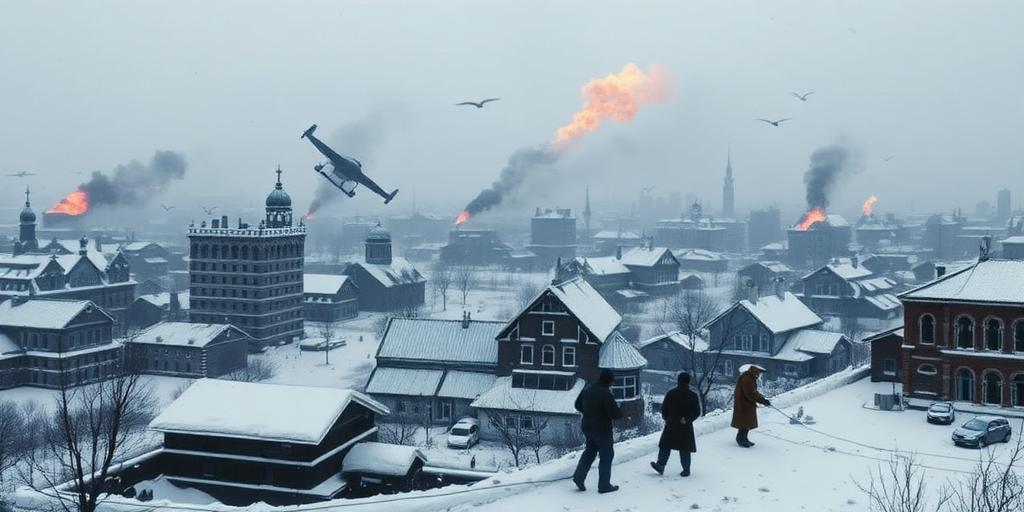
The Siege of Leningrad, a brutal and devastating period in World War II history, lasted for 872 days, from September 8, 1941, to January 27, 1944. During this time, the city, now known as Saint Petersburg, was encircled by German forces, resulting in immense suffering and loss of life for its inhabitants. This article delves into the key aspects of the siege, highlighting the horror endured by the citizens and their extraordinary resilience.
Background
Following the German invasion of the Soviet Union in June 1941, Leningrad became a primary target due to its strategic importance as a major industrial and cultural center. The German forces aimed to cut off the city, starve its population, and ultimately capture it.
The Encirclement
By early September 1941, the German forces, along with Finnish troops on the northern front, had effectively encircled Leningrad, severing all land routes for supplies. The only connection to the outside world was via Lake Ladoga, which became known as the "Road of Life," and by air.
Conditions Inside the City
Conditions within Leningrad deteriorated rapidly. Food and fuel supplies dwindled, leading to widespread starvation and disease. The winter of 1941-1942 was particularly harsh, with temperatures plummeting to record lows. Civilians resorted to desperate measures to survive, including consuming wallpaper paste and pets.
Food Shortages and Rationing
The Soviet government implemented a rationing system, but the rations were woefully inadequate. Initially, workers received more food than non-workers, but as supplies diminished, rations were reduced across the board. By November 1941, civilians were receiving as little as 125 grams of bread per day, which consisted mostly of sawdust and other inedible materials.
The "Road of Life"
During the winter months, when Lake Ladoga froze over, the "Road of Life" became the primary supply route into the city. Trucks transported food, fuel, and other essential supplies across the ice, while also evacuating civilians. The road was constantly under German bombardment, making it a perilous lifeline.
Bombardments and Casualties
Leningrad was subjected to relentless artillery and aerial bombardments by the German forces. These attacks caused immense destruction and loss of life. Over one million civilians are estimated to have died during the siege, primarily from starvation, disease, and exposure to the cold.
Heroism and Resistance
Despite the unimaginable suffering, the citizens of Leningrad displayed extraordinary heroism and resilience. They organized themselves into defense units, worked tirelessly in factories to produce weapons and ammunition, and maintained essential services.
Cultural Preservation
Amidst the devastation, efforts were made to preserve the city's cultural heritage. Museum artifacts were evacuated, and cultural institutions continued to operate, providing a sense of normalcy and hope to the besieged population.
Partisan Activity
Partisan groups operated in the surrounding areas, disrupting German supply lines and providing intelligence to the Soviet forces. These courageous individuals played a crucial role in weakening the German grip on the city.
Breaking the Siege
After numerous failed attempts, the Soviet forces launched a major offensive in January 1943, code-named Operation Iskra. This operation succeeded in opening a narrow land corridor to Leningrad, allowing for increased supplies to reach the city. However, the siege was not completely lifted until January 27, 1944, when a full-scale offensive drove the German forces away from the city.
Legacy
The Siege of Leningrad remains one of the deadliest sieges in human history. It stands as a testament to the indomitable spirit of the human will to survive under the most horrific conditions. The heroism and sacrifices of the citizens of Leningrad are remembered and honored to this day.
In conclusion, the Siege of Leningrad was a period of unparalleled horror and suffering, but also one of extraordinary heroism and resilience. The events that unfolded during those 872 days serve as a reminder of the importance of peace and the devastating consequences of war.


