
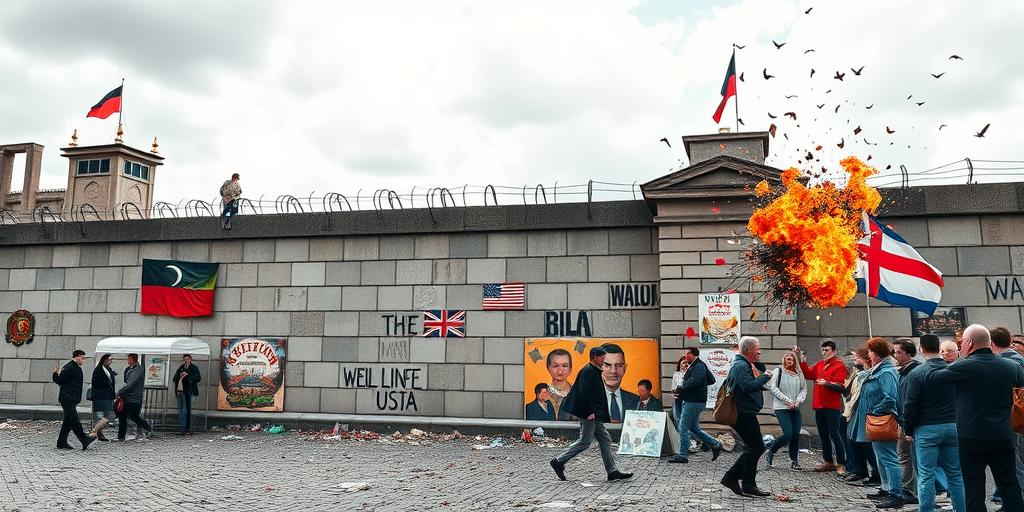
The Berlin Wall: A Symbol of Division and Its Dramatic Fall
The Berlin Wall, a stark concrete barrier that physically and ideologically divided Berlin from 1961 to 1989, stands as one of the most potent symbols of the Cold War. Its construction and eventual dismantling encapsulate the tensions between East and West, and the enduring human desire for freedom and unity.
The Genesis of Division
Following World War II, Germany was divided into four occupation zones controlled by the Allied powers: the United States, the United Kingdom, France, and the Soviet Union. Berlin, located deep within the Soviet zone, was similarly divided. As ideological differences between the Western Allies and the Soviet Union intensified, so did the divisions within Berlin. West Berlin became an enclave of democratic ideals and economic prosperity, while East Berlin remained under Soviet influence, adhering to communist principles.
The Wall's Construction
On August 13, 1961, the East German government, with Soviet backing, began constructing the Berlin Wall. Initially a barbed-wire fence, it was quickly replaced by a more formidable concrete structure. The Wall's purpose, according to East German authorities, was to prevent the "brain drain" of skilled workers and professionals fleeing to the West. However, its true aim was to prevent East Germans from escaping the oppressive communist regime.
Life Behind the Wall
The Berlin Wall not only divided a city but also families and friends. Crossing between East and West Berlin became virtually impossible, severing connections and creating a climate of fear and suspicion. The Wall was heavily guarded, with watchtowers, armed soldiers, and minefields designed to deter any attempts to escape. Despite the risks, many East Germans attempted to flee to the West, some successfully, others tragically losing their lives in the process.
A Symbol of the Cold War
The Berlin Wall became a tangible representation of the Iron Curtain, the metaphorical barrier separating the communist Eastern Bloc from the democratic West. It served as a focal point for Cold War tensions, with numerous confrontations and standoffs occurring along its length. World leaders, such as U.S. President John F. Kennedy, visited the Wall to demonstrate their support for West Berlin and its people. Kennedy's famous declaration, "Ich bin ein Berliner," underscored the solidarity between the United States and West Berlin.
The Wall's Demise
By the late 1980s, the Soviet Union was facing significant economic and political challenges. In 1989, a wave of protests swept across Eastern Europe, demanding greater freedoms and democratic reforms. On November 9, 1989, the East German government announced that its citizens were free to cross the border. This announcement was met with jubilation as thousands of East Berliners flocked to the Wall, where they were greeted by West Berliners. The Wall, once a symbol of division, became a site of celebration and reunification.
The Aftermath and Legacy
The fall of the Berlin Wall marked a turning point in history, signaling the end of the Cold War and the reunification of Germany. The dismantling of the Wall began shortly after its opening, with people from both sides tearing down sections as a symbol of their newfound freedom. The Wall's legacy serves as a reminder of the dangers of division and the importance of freedom, democracy, and human rights.
Conclusion
The Berlin Wall stands as a historical testament to the human cost of ideological division and the enduring power of the human spirit. Its rise and fall offer valuable lessons about the importance of freedom, unity, and the pursuit of a more just and equitable world. The memory of the Berlin Wall serves as a reminder to remain vigilant against oppression and to strive for a future where walls, both physical and metaphorical, no longer divide us.


