
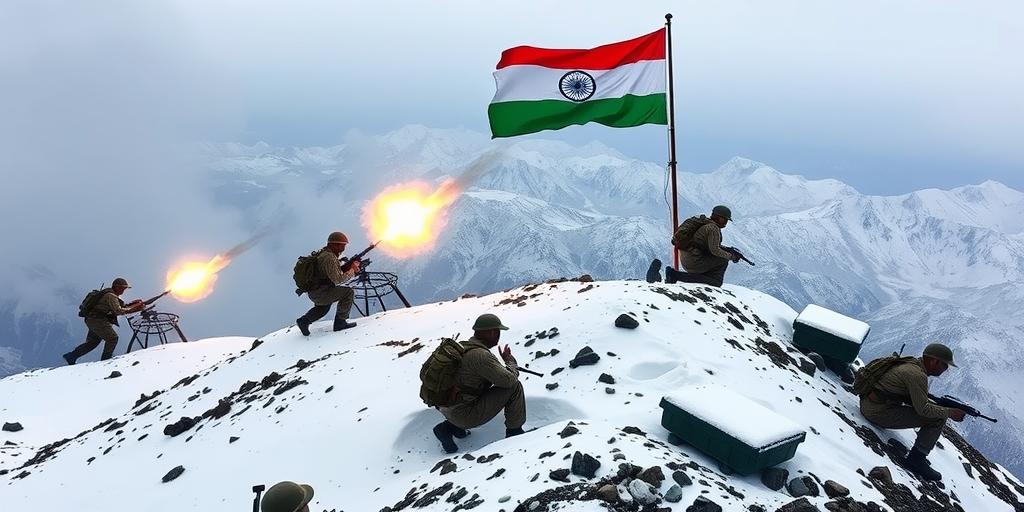
Kargil War 1999: India's Triumph in High-Altitude Mountain Warfare
The Kargil War, fought in 1999, stands as a testament to the valor and strategic capabilities of the Indian Armed Forces. This conflict, triggered by the infiltration of Pakistani soldiers and militants into the Kargil region of Jammu and Kashmir, tested India's resolve and its ability to conduct high-altitude warfare.
Background to the Conflict
Following the Indo-Pakistani War of 1971, both nations maintained a tense relationship, with the Line of Control (LoC) serving as the de facto border in the disputed Kashmir region. In the winter of 1998-99, Pakistani forces covertly crossed the LoC and occupied strategic peaks in the Kargil sector. These positions provided them with a significant advantage, allowing them to monitor and target Indian supply lines to the Siachen Glacier.
Discovery and Initial Response
The Indian Army initially attributed the intrusion to militants but soon realized the scale and depth of the infiltration. The response was swift, with the launch of Operation Vijay to evict the intruders. The initial phase involved identifying and assessing the extent of the occupation, a challenging task given the harsh terrain and weather conditions.
Operation Vijay: The Battle for Kargil
Operation Vijay involved a multi-pronged approach:
- Artillery Barrage: Indian artillery relentlessly bombarded the enemy positions to soften their defenses.
- Infantry Assaults: Infantry units, including the famed Gorkha Rifles and Grenadiers, launched direct assaults on the heavily fortified peaks. These battles were fought at altitudes ranging from 14,000 to 18,000 feet, making them exceptionally challenging.
- Air Support: The Indian Air Force provided crucial air support, targeting enemy supply lines and fortifications, despite facing limitations due to the high altitude and terrain.
Key battles were fought at Tololing, Tiger Hill, and Point 4875 (now known as Batra Top), each marked by intense fighting and heavy casualties on both sides. Indian soldiers displayed remarkable courage and determination, often charging uphill against well-entrenched enemy positions.
Strategic Significance of Key Battles
- Tololing: The capture of Tololing was a major turning point, demonstrating India's ability to dislodge the enemy from key strongholds.
- Tiger Hill: The battle for Tiger Hill became a symbol of Indian resolve. Its recapture significantly weakened the Pakistani position and boosted Indian morale.
- Point 4875: Renamed Batra Top in honor of Captain Vikram Batra, who died during the battle, its capture was critical for securing the surrounding areas.
International Pressure and Diplomatic Efforts
As the conflict escalated, India garnered international support, particularly from the United States. Diplomatic pressure mounted on Pakistan to withdraw its forces. The then-Prime Minister of Pakistan, Nawaz Sharif, eventually agreed to pull back Pakistani troops, leading to the end of the conflict.
Outcome and Aftermath
On July 26, 1999, India declared Operation Vijay a success. The Kargil War resulted in significant losses on both sides but reaffirmed India's territorial integrity. The conflict led to a comprehensive review of India's defense preparedness and intelligence gathering, resulting in significant improvements in these areas.
Lessons Learned
The Kargil War highlighted several critical lessons:
- Importance of Vigilance: The need for constant vigilance along the LoC to prevent future incursions.
- Intelligence Gathering: Enhancing intelligence capabilities to detect enemy movements and intentions.
- High-Altitude Warfare: Improving training and equipment for high-altitude warfare.
- Coordination: Strengthening coordination between the Army, Air Force, and intelligence agencies.
Conclusion
The Kargil War remains a defining moment in India's military history. It showcased the bravery, resilience, and strategic acumen of the Indian Armed Forces. The triumph in the face of challenging conditions underscores the importance of preparedness, vigilance, and unwavering resolve in safeguarding national interests. The sacrifices made by Indian soldiers during the Kargil War continue to inspire and remind the nation of the cost of freedom and security.
Long-Tail Keywords
- Kargil War analysis
- Operation Vijay details
- India Pakistan conflict 1999
- High-altitude warfare Kargil
- Kargil War lessons learned


