
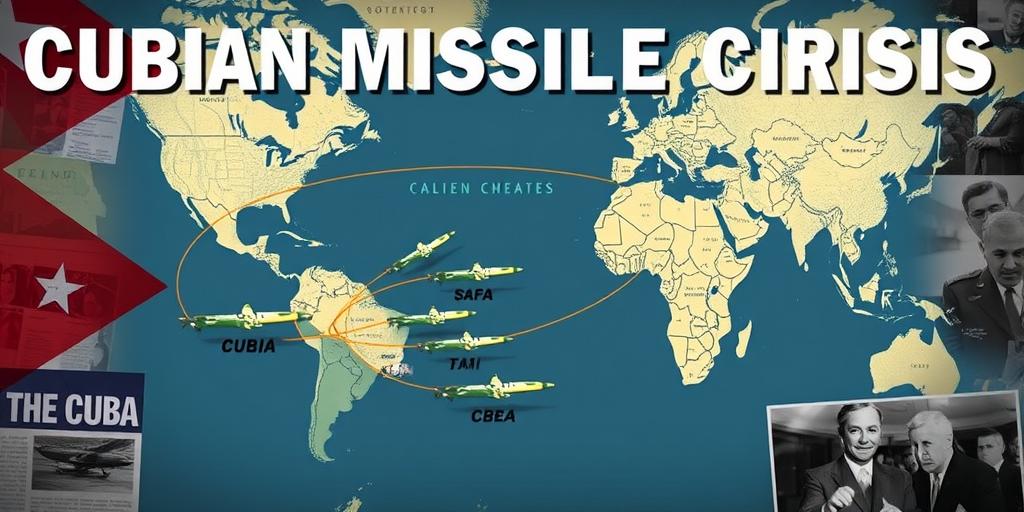
The Cuban Missile Crisis, a tense 13-day standoff in October 1962, brought the United States and the Soviet Union to the brink of nuclear war. Recent declassifications of documents and testimonies shed new light on just how close the world came to catastrophe. This article delves into these revelations, providing a comprehensive look at the decisions, miscalculations, and near misses that defined this pivotal moment in history.
The Discovery and Initial Response
The crisis began on October 16, 1962, when U.S. intelligence analysts presented President John F. Kennedy with photographic evidence of Soviet nuclear missiles being installed in Cuba. The immediate concern was the proximity of these missiles to American shores, capable of striking major U.S. cities within minutes. The Kennedy administration was faced with a range of options, from diplomatic negotiations to a full-scale invasion of Cuba. A naval quarantine, termed a 'quarantine' rather than a 'blockade' to avoid a formal declaration of war, was chosen as the initial response.
Behind Closed Doors: Decision-Making in the White House
Declassified transcripts of meetings held by the Executive Committee of the National Security Council (EXCOMM) reveal the intense debates and disagreements among Kennedy's advisors. Some advocated for immediate military action, arguing that the missiles posed an unacceptable threat. Others, including Robert Kennedy, cautioned against a surprise attack, emphasizing the moral implications and the potential for Soviet retaliation. The newly released documents highlight the critical role played by Robert Kennedy, who served as a key advisor and intermediary, advocating for a more measured approach and urging his brother to consider the human cost of any decision.
The Soviet Perspective
For decades, the Soviet Union's motivations for placing missiles in Cuba remained a subject of speculation. Declassified Soviet archives now provide a clearer picture. Premier Nikita Khrushchev aimed to redress the strategic imbalance caused by the presence of American Jupiter missiles in Turkey, near the Soviet border. Khrushchev also sought to deter any potential U.S. invasion of Cuba, which had been a target of American hostility since the failed Bay of Pigs invasion in 1961. These documents reveal that the Soviet leadership genuinely believed that the missiles were necessary to protect Cuba and maintain the balance of power.
The Brink of War: Near Misses and Miscalculations
Several incidents during the crisis brought the world perilously close to nuclear war. On October 27, a U-2 spy plane was shot down over Cuba, killing the pilot, Major Rudolf Anderson. This event ratcheted up tensions significantly, with some in the U.S. military calling for retaliatory strikes. Simultaneously, Soviet submarines in the Caribbean were being aggressively pursued by the U.S. Navy. One submarine, B-59, nearly launched a nuclear torpedo in response to what it perceived as an attack. Only the presence of Vasili Arkhipov, the submarine's second-in-command, who refused to authorize the launch, prevented a potential nuclear exchange. These declassified accounts underscore how easily miscalculations and human error could have triggered a global conflict.
The Resolution and Its Aftermath
The crisis was ultimately resolved through a combination of public and secret negotiations. Publicly, the Soviet Union agreed to remove the missiles from Cuba in exchange for a U.S. pledge not to invade the island. Secretly, the U.S. also agreed to remove its Jupiter missiles from Turkey. This agreement, while controversial at the time, provided Khrushchev with a face-saving way out of the crisis. The Cuban Missile Crisis had a profound impact on the Cold War. It led to the establishment of a direct communication line between Washington and Moscow, known as the 'hotline,' to prevent future misunderstandings. It also prompted both sides to reassess their nuclear strategies and pursue arms control negotiations. The declassified documents offer a more nuanced understanding of the events, highlighting the roles of key individuals, the missteps that nearly led to war, and the lessons learned from this perilous chapter in history.
Conclusion
The declassified records of the Cuban Missile Crisis provide invaluable insights into one of the most dangerous moments in human history. They reveal the complexities of decision-making under extreme pressure, the importance of communication and diplomacy, and the ever-present risk of miscalculation. By studying these new revelations, we can gain a deeper appreciation of the challenges faced by leaders during the Cold War and the importance of avoiding similar crises in the future. The lessons learned from the Cuban Missile Crisis remain relevant today, as the world continues to grapple with nuclear proliferation and international tensions.


