
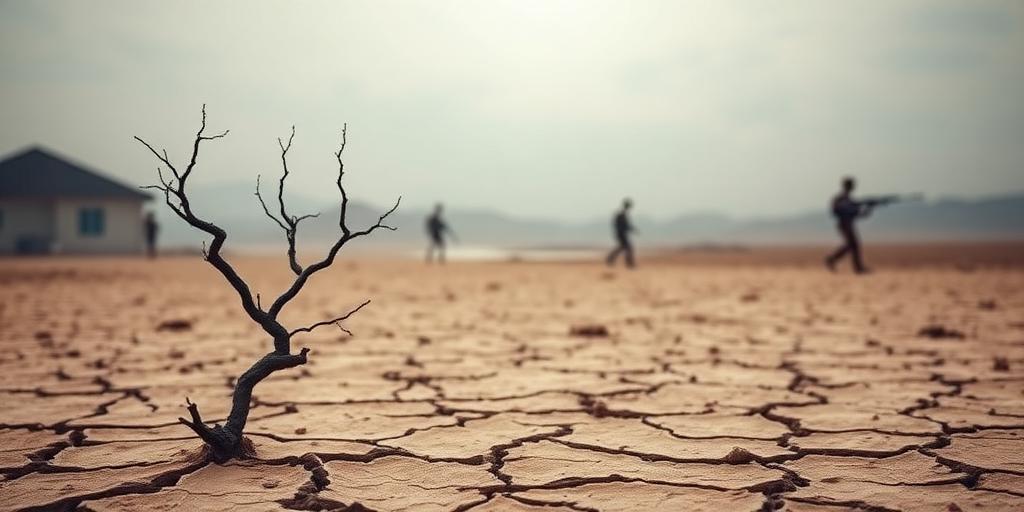
Water Wars: Is Competition for Scarce Resources the Next Global Flashpoint?
Water, an essential element for life, is becoming increasingly scarce in many parts of the world. As populations grow, economies develop, and climate change intensifies, the demand for water is outpacing its availability. This scarcity is not just an environmental issue; it's rapidly becoming a geopolitical one, with the potential to ignite conflicts and destabilize regions. This post explores the emerging reality of 'water wars,' examining the causes, potential flashpoints, and possible solutions to this looming crisis.
The Looming Water Crisis: A Perfect Storm
Several factors are converging to create a global water crisis:
- Population Growth: More people require more water for drinking, sanitation, and food production. Urbanization concentrates demand in specific areas, exacerbating local shortages.
- Economic Development: Industrialization and agriculture, particularly water-intensive practices like irrigation, significantly increase water consumption.
- Climate Change: Altered precipitation patterns, increased evaporation, and more frequent droughts are reducing water availability in many regions. Melting glaciers, a crucial water source for many communities, are shrinking at an alarming rate.
- Pollution: Contamination from industrial discharge, agricultural runoff, and inadequate sanitation systems degrades water quality, further limiting usable supplies.
- Inefficient Management: Poor infrastructure, wasteful practices, and inadequate governance contribute to water loss and inequitable distribution.
Potential Flashpoints: Where Water Scarcity Breeds Conflict
The consequences of water scarcity are far-reaching, potentially leading to:
- Interstate Conflicts: Rivers and lakes often cross international borders. When water becomes scarce, disputes over allocation and access can escalate into political tensions and even armed conflicts. Examples include the Nile River Basin (shared by Egypt, Sudan, and Ethiopia) and the Indus River Basin (shared by India and Pakistan).
- Intrastate Conflicts: Within countries, competition for water can trigger conflicts between different regions, communities, or economic sectors. For example, farmers may clash with urban dwellers over water rights during droughts.
- Resource Wars: Water scarcity can exacerbate existing political, economic, and ethnic tensions, leading to broader conflicts over resources and power.
- Mass Migration: As water sources dry up, people may be forced to migrate in search of water and livelihoods, creating refugee crises and straining resources in receiving areas.
Case Studies: Water Disputes Around the Globe
- The Nile River Basin: The Grand Ethiopian Renaissance Dam (GERD) has created tensions with Egypt and Sudan, who fear it will reduce their access to Nile waters.
- The Middle East: Decades of conflict and political instability, combined with arid climates and growing populations, have made water a critical issue in the region. The Jordan River Basin, shared by Israel, Jordan, and Syria, is a major source of contention.
- Central Asia: The Aral Sea disaster, caused by excessive irrigation, highlights the devastating consequences of unsustainable water management. Disputes over water resources are common among the countries of the region.
- California: The ongoing drought in California has led to intense competition for water among farmers, cities, and environmental groups.
Finding Solutions: Cooperation and Innovation
Addressing the water crisis requires a multi-faceted approach, including:
- International Cooperation: Establishing agreements and institutions for equitable water sharing and joint management of transboundary water resources.
- Sustainable Water Management: Implementing policies and practices to conserve water, reduce pollution, and improve efficiency in agriculture, industry, and domestic use.
- Technological Innovation: Developing and deploying technologies for water desalination, water recycling, and more efficient irrigation.
- Climate Change Mitigation: Reducing greenhouse gas emissions to slow down the pace of climate change and its impact on water resources.
- Community Engagement: Empowering local communities to participate in water management decisions and promoting water conservation awareness.
The looming water crisis presents a significant challenge to global peace and security. By understanding the causes, potential flashpoints, and possible solutions, we can work together to prevent water wars and ensure a sustainable future for all.


