
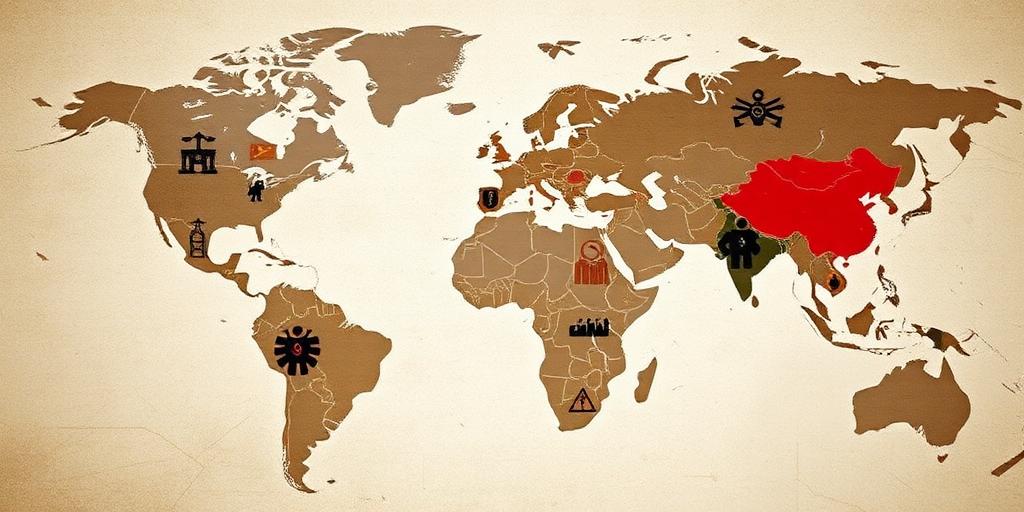
Transnational crime poses a significant threat to global security, often intertwining with terrorism and contributing to state instability. These illicit activities, which transcend national borders, encompass a wide range of offenses, including drug trafficking, human smuggling, arms dealing, and financial crimes. Understanding the connections between transnational crime, terrorism, and state instability is crucial for developing effective strategies to mitigate these threats.
One of the primary links between transnational crime and terrorism lies in the funding of terrorist organizations. Terrorist groups often rely on criminal activities to generate revenue, which is then used to finance their operations, recruit new members, and procure weapons. For example, drug trafficking has been a significant source of funding for terrorist groups in regions such as Afghanistan and the Sahel. Similarly, human smuggling and kidnapping for ransom provide substantial income for terrorist organizations in the Middle East and Africa.
In addition to funding, transnational criminal networks also provide logistical support to terrorist groups. Criminal organizations can facilitate the movement of terrorists across borders, supply them with weapons and explosives, and provide them with safe havens. The porous borders and weak governance in many conflict-affected regions make it easier for both criminals and terrorists to operate.
The convergence of transnational crime and terrorism can have a destabilizing effect on states, particularly those with weak institutions and a history of conflict. Criminal and terrorist groups can undermine the rule of law, erode public trust in government, and exacerbate existing social and economic grievances. In some cases, these groups may even seek to establish control over territory, challenging the authority of the state.
Furthermore, transnational crime can fuel corruption, which further weakens state institutions and creates opportunities for criminal and terrorist groups to thrive. Corruption can facilitate the movement of illicit goods and funds, hinder law enforcement efforts, and undermine the integrity of the justice system.
Addressing the links between transnational crime, terrorism, and state instability requires a comprehensive and coordinated approach. This includes strengthening international cooperation to combat transnational criminal networks, disrupting the flow of funds to terrorist groups, and improving governance and the rule of law in vulnerable states. It also requires addressing the root causes of crime and terrorism, such as poverty, inequality, and lack of opportunity.
In conclusion, transnational crime poses a significant threat to global security, often intertwining with terrorism and contributing to state instability. By understanding the connections between these phenomena and implementing effective strategies to address them, we can work towards a more secure and stable world.


