
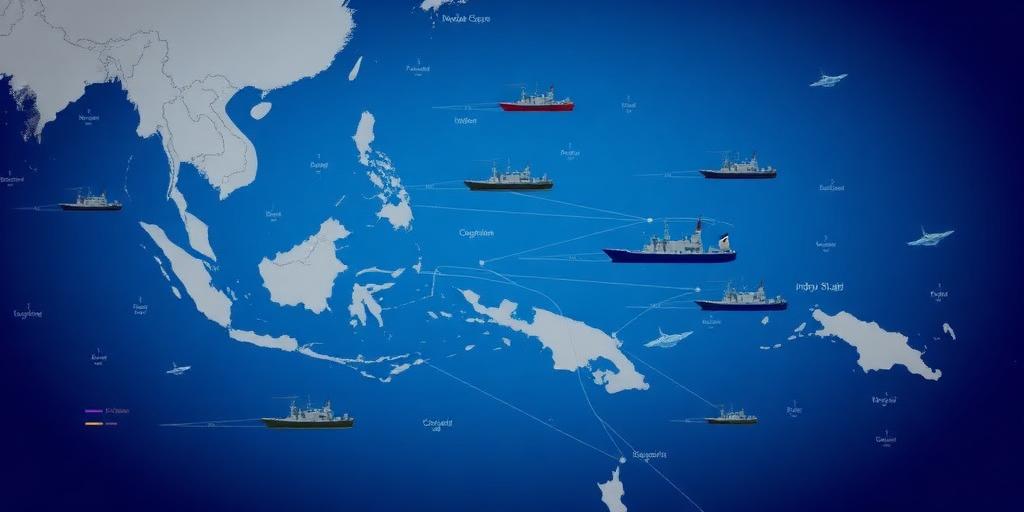
Securing a Free and Open Indo-Pacific: Maritime Challenges and Strategies
The Indo-Pacific region stands as a critical arena for global trade, security, and geopolitical influence. Its vast maritime domain, however, faces a complex web of challenges that threaten the vision of a free and open Indo-Pacific. This post examines these challenges and explores potential strategies to maintain stability and promote cooperation.
Key Maritime Challenges:
- Territorial Disputes: The South China Sea remains a hotspot, with overlapping claims leading to tensions between China and several ASEAN nations. These disputes not only affect regional stability but also impede freedom of navigation.
- Illegal, Unreported, and Unregulated (IUU) Fishing: IUU fishing depletes marine resources, threatens food security, and undermines the livelihoods of coastal communities. It also has links to transnational crime and forced labor.
- Piracy and Armed Robbery at Sea: While piracy has decreased in some areas, it remains a concern in the Malacca Strait and other strategic waterways, posing a threat to maritime trade and security.
- Environmental Degradation: Pollution, climate change, and unsustainable development are degrading marine ecosystems, impacting biodiversity, and increasing vulnerability to natural disasters.
- Non-Traditional Security Threats: These include humanitarian crises, natural disasters, and the spread of terrorism, which require coordinated responses and resource mobilization.
Strategies for a Secure and Open Indo-Pacific:
- Strengthening Regional Cooperation: Enhanced dialogue and collaboration among Indo-Pacific nations are crucial for addressing shared maritime challenges. Forums like the East Asia Summit (EAS) and the ASEAN Regional Forum (ARF) can play a vital role in fostering cooperation.
- Promoting the Rule of Law: Adherence to international law, particularly the United Nations Convention on the Law of the Sea (UNCLOS), is essential for resolving territorial disputes peacefully and ensuring freedom of navigation.
- Enhancing Maritime Domain Awareness (MDA): Investing in technology and intelligence sharing to improve MDA is critical for detecting and responding to maritime threats effectively. This includes utilizing satellite imagery, radar systems, and information networks.
- Building Maritime Capacity: Providing training and resources to enhance the maritime capabilities of regional partners is crucial for improving their ability to patrol their waters, combat IUU fishing, and respond to maritime security threats.
- Supporting Sustainable Development: Promoting sustainable fishing practices, reducing pollution, and investing in climate resilience are essential for protecting marine ecosystems and ensuring the long-term viability of coastal communities.
- Multilateral Partnerships: Collaborations between countries are essential in addressing complex challenges. For example, The Quad (United States, India, Japan, and Australia) demonstrates this via working together on maritime security, humanitarian assistance, and disaster relief.
Conclusion:
Securing a free and open Indo-Pacific requires a multifaceted approach that addresses both traditional and non-traditional security threats. By strengthening regional cooperation, promoting the rule of law, enhancing MDA, building maritime capacity, and supporting sustainable development, Indo-Pacific nations can work together to create a more secure, stable, and prosperous maritime domain.


