Global Security Propaganda & Media Peace & Diplomacy History of Wars Geopolitical Strategy
Home Current Conflicts SUBSCRIBE
Home Propaganda & Media Peace & Diplomacy History of Wars Geopolitical Strategy Defense & Military Current Conflicts SUBSCRIBE
•  Food Security as a National Security Issue: The Ukraine War's Impact •  Russia's T-14 Armata Tank: Reality vs. Hype After Ukraine •  Economic Sanctions as a Tool of Diplomacy: When Do They Work? •  NATO's Adaptation to Hybrid Threats: From Cyber Attacks to Disinformation •  America's B-21 Raider Stealth Bomber: A Game Changer for Power Projection •  China's Growing Footprint in Latin America: Opportunities and Anxieties •  Women Spies of WWII: Courage, Deception, and Unsung Heroism •  G7 vs. Global South: Can the Divide on Ukraine and Other Issues Be Bridged?
Home Global Security Drone Proliferation: How Cheap UAVs Are Changing Asymmetric Warfare
BREAKING

Drone Proliferation: How Cheap UAVs Are Changing Asymmetric Warfare

Explore how the increasing availability of cheap drones is changing the dynamics of asymmetric warfare, presenting both opportunities and challenges for global security.

Author
By News Desk
2 June 2025
Drone Proliferation: How Cheap UAVs Are Changing Asymmetric Warfare

Drone Proliferation: How Cheap UAVs Are Changing Asymmetric Warfare

Drone Proliferation: How Cheap UAVs Are Changing Asymmetric Warfare

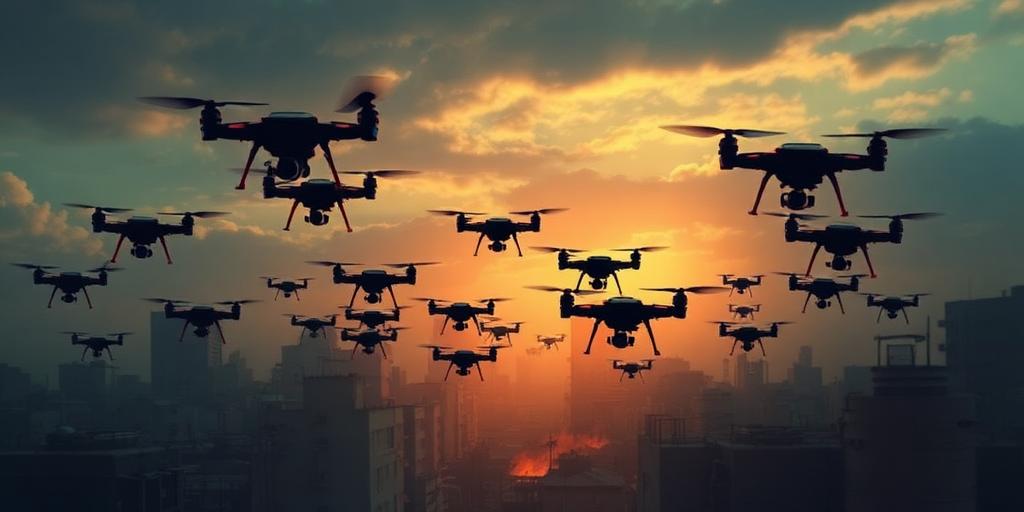
The increasing availability and affordability of unmanned aerial vehicles (UAVs), commonly known as drones, are significantly reshaping the landscape of asymmetric warfare. Once the domain of major military powers, drones are now accessible to a wide range of actors, including non-state armed groups, insurgents, and even individuals. This proliferation presents both opportunities and challenges for global security.

The Democratization of Air Power

The most significant impact of drone proliferation is the democratization of air power. Previously, only nations with sophisticated air forces could conduct aerial reconnaissance, surveillance, and targeted strikes. Today, relatively inexpensive drones can provide these capabilities to smaller, less technologically advanced groups. This levels the playing field, allowing non-state actors to challenge traditional military forces.

Applications in Asymmetric Warfare

  • Reconnaissance and Surveillance: Drones provide real-time intelligence on enemy positions, movements, and activities, enabling more effective planning and execution of operations.
  • Targeted Strikes: Armed drones can deliver precision strikes against specific targets, minimizing collateral damage and reducing the risk to friendly forces.
  • Psychological Warfare: Drones can be used to intimidate and demoralize enemy forces, disrupting their operations and undermining their morale.
  • Smuggling and Illegal Activities: Drones facilitate the smuggling of goods, weapons, and drugs across borders, undermining law enforcement efforts and fueling criminal activities.

Challenges and Concerns

While drones offer numerous advantages, their proliferation also raises serious concerns:

  • Lack of Regulation: The absence of comprehensive regulations governing the production, sale, and use of drones makes it difficult to track and control their spread.
  • Risk of Misuse: Drones can be easily weaponized and used for malicious purposes, including terrorist attacks, assassinations, and espionage.
  • Ethical Dilemmas: The use of drones in warfare raises ethical questions about the targeting of individuals, the potential for civilian casualties, and the erosion of accountability.
  • Countermeasures: Traditional defenses are often ineffective against small, agile drones, requiring the development of new countermeasures, such as electronic jamming, laser weapons, and drone-hunting drones.

The Future of Drone Warfare

As drone technology continues to advance and become more accessible, its impact on asymmetric warfare will only intensify. The development of autonomous drones, artificial intelligence, and swarm technology will further enhance their capabilities and make them even more difficult to counter. Addressing the challenges posed by drone proliferation requires a multi-faceted approach, including international cooperation, stricter regulations, and the development of effective countermeasures.

The views expressed in this article are for informational purposes only and do not constitute professional military or strategic advice.

Author

News Desk

You Might Also Like

Related article

Drone Proliferation: How Cheap UAVs Are Changing Asymmetric Warfare

Related article

Drone Proliferation: How Cheap UAVs Are Changing Asymmetric Warfare

Related article

Drone Proliferation: How Cheap UAVs Are Changing Asymmetric Warfare

Related article

Drone Proliferation: How Cheap UAVs Are Changing Asymmetric Warfare

Follow US

| Facebook
| X
| Youtube
| Tiktok
| Telegram
| WhatsApp

Newsletter

Stay informed with our daily digest of top stories and breaking news.

Most Read

1

America's B-21 Raider Stealth Bomber: A Game Changer for Power Projection

2

China's Growing Footprint in Latin America: Opportunities and Anxieties

3

Women Spies of WWII: Courage, Deception, and Unsung Heroism

4

G7 vs. Global South: Can the Divide on Ukraine and Other Issues Be Bridged?

5

Ukraine's Black Sea Blockade: Global Food Security at Risk Again

Featured

Featured news

The "Fog of War" Online: Separating Fact from Fiction on Social Media

Featured news

The Sino-Indian War of 1962: A Lasting Impact on Himalayan Geopolitics

Featured news

North Korea's Ballistic Missile Program: A Persistent Global Security Headache

Featured news

Rebuilding Gaza: The Politics of Reconstruction Amidst Ongoing Tensions

Newsletter icon

Newsletter

Get the latest news delivered to your inbox every morning

About Us

  • Who we are
  • Contact Us
  • Advertise

Connect

  • Facebook
  • Twitter
  • Instagram
  • YouTube

Legal

  • Privacy Policy
  • Cookie Policy
  • Terms and Conditions
© 2025 . All rights reserved.