
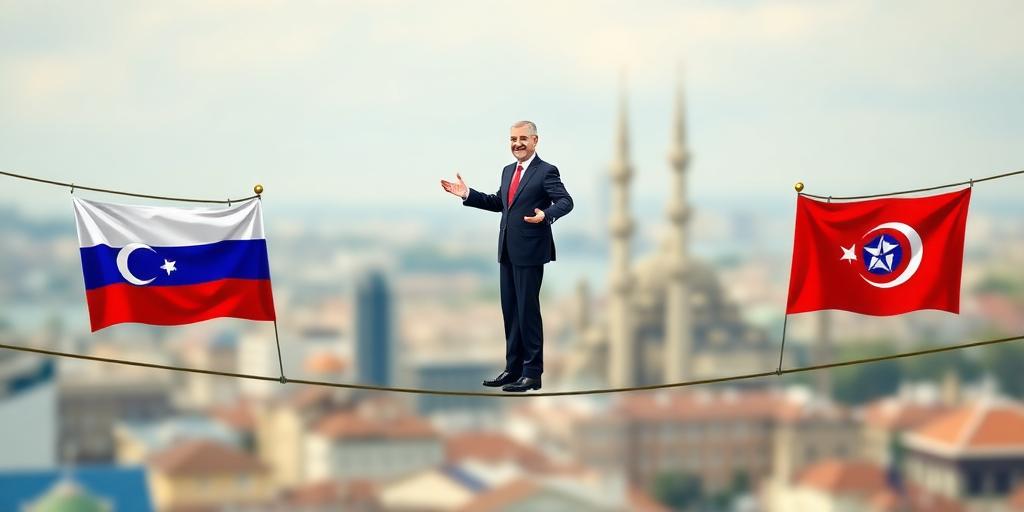
Turkey's Balancing Act: Erdoğan's Strategy Between Russia and the West
Turkey, under the leadership of President Recep Tayyip Erdoğan, has adopted a complex and often scrutinized foreign policy characterized by its delicate balancing act between Russia and the West. This strategy, driven by a combination of geopolitical, economic, and domestic considerations, positions Turkey as a key player in a region fraught with challenges and opportunities.
Geopolitical Imperatives
Turkey's geographic location at the crossroads of Europe and Asia gives it unique strategic importance. It shares maritime borders with both Russia and Ukraine in the Black Sea and maintains a land border with several Middle Eastern countries, including Syria and Iraq. This positioning necessitates a nuanced foreign policy that acknowledges and navigates the interests of various actors.
- NATO Membership: Turkey has been a member of the North Atlantic Treaty Organization (NATO) since 1952, aligning it with Western defense structures. However, its relationship with NATO allies has been strained by disagreements over issues such as the Syrian civil war, Turkey's acquisition of Russian S-400 missile defense systems, and differing approaches to regional security challenges.
- Relationship with Russia: Despite being a NATO member, Turkey has cultivated a complex relationship with Russia. This relationship is driven by energy dependence, defense cooperation, and a shared desire to limit the influence of other regional and global powers. The construction of the TurkStream natural gas pipeline and Turkey's purchase of the S-400 system highlight this cooperation.
- Regional Ambitions: Turkey seeks to assert itself as a regional power, with ambitions extending across the Eastern Mediterranean, the Black Sea, and parts of Africa. This ambition often puts Turkey at odds with other regional actors, including Greece, Cyprus, and Egypt, as well as major powers like France.
Economic Considerations
Economic factors play a significant role in shaping Turkey's foreign policy decisions. The country's reliance on Russian energy imports, its need for foreign investment, and its desire to expand trade relationships all influence its interactions with both Russia and the West.
- Energy Dependence: Turkey relies heavily on Russia for natural gas and nuclear energy. The TurkStream pipeline, which transports Russian gas to Turkey and onward to Europe, underscores this dependence. Maintaining stable energy relations with Russia is crucial for Turkey's economic stability.
- Trade Relations: Turkey has significant trade relations with both Russia and the European Union. Russia is a major trading partner, particularly in energy and raw materials, while the EU remains one of Turkey's largest export markets. Balancing these trade relationships is essential for Turkey's economic growth.
- Investment Needs: Turkey requires foreign investment to fuel its economic development. While Western countries have traditionally been major investors, Turkey has also sought investment from Russia and other sources. This diversification of investment partners is part of Turkey's broader strategy of not being overly reliant on any single bloc.
Domestic Politics
Domestic political considerations also influence Turkey's foreign policy. President Erdoğan's government must navigate a complex domestic landscape, balancing nationalist sentiments, economic pressures, and the need to maintain political stability.
- Nationalism: Turkish nationalism plays a significant role in shaping public opinion and government policy. Erdoğan's government often adopts a assertive foreign policy stance to appeal to nationalist sentiments and bolster domestic support.
- Economic Pressures: Economic challenges, such as inflation and unemployment, can constrain Turkey's foreign policy options. The government must balance its foreign policy ambitions with the need to address domestic economic concerns.
- Political Stability: Maintaining political stability is a key priority for Erdoğan's government. Foreign policy decisions are often made with an eye toward their potential impact on domestic political dynamics.
Challenges and Opportunities
Turkey's balancing act between Russia and the West presents both challenges and opportunities. The country must manage competing interests, navigate complex geopolitical dynamics, and address domestic pressures.
- Maintaining Credibility: Turkey faces the challenge of maintaining credibility with both Russia and its Western allies. Its relationships with both sides are often viewed with suspicion, and Turkey must work to build trust and demonstrate its commitment to its stated goals.
- Navigating Geopolitical Tensions: Turkey operates in a region marked by geopolitical tensions and conflicts. It must navigate these challenges carefully, avoiding actions that could escalate tensions or undermine regional stability.
- Seizing Opportunities: Turkey's strategic location and its ability to engage with both Russia and the West also present opportunities. It can serve as a mediator in regional conflicts, a hub for energy transit, and a bridge between different cultures and economies.
Conclusion
Turkey's foreign policy under President Erdoğan is characterized by its complex balancing act between Russia and the West. This strategy is driven by geopolitical imperatives, economic considerations, and domestic political factors. While this approach presents both challenges and opportunities, it reflects Turkey's ambition to assert itself as a key regional power and navigate a complex and rapidly changing world.


