
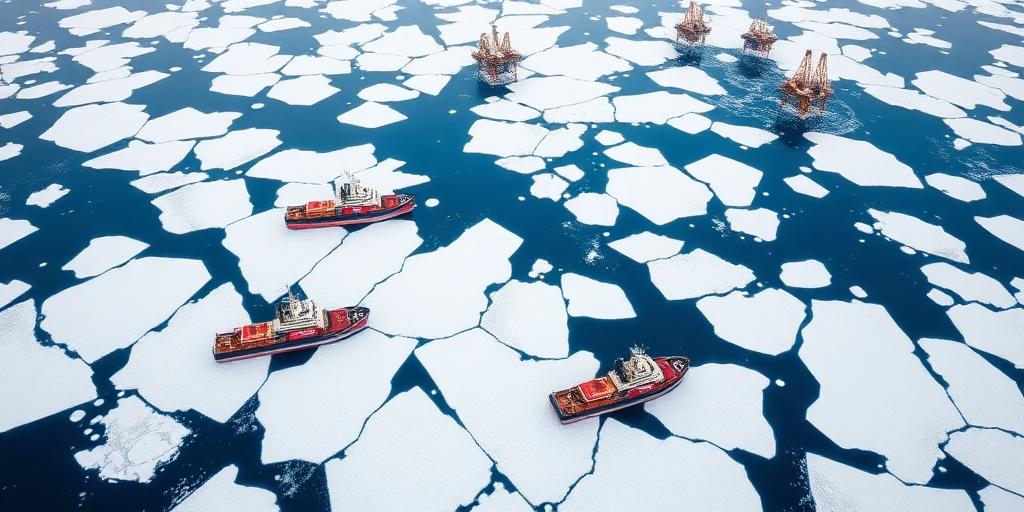
The Arctic Scramble: Great Powers Vie for Resources and Routes
The Arctic region, once a remote and icy wilderness, is rapidly transforming into a strategic arena where major global powers are increasingly vying for influence. Driven by climate change, which is causing unprecedented ice melt and opening up new sea routes and access to vast natural resources, the Arctic has become a focal point of international competition and cooperation. This article examines the key players involved in the Arctic scramble, their strategic interests, and the potential implications for the region's future.
The Melting Arctic: A New Frontier
The Arctic is warming at a rate twice as fast as the global average, leading to significant reductions in sea ice extent and thickness. This phenomenon has profound consequences, including:
- Opening of Arctic Shipping Routes: The Northern Sea Route (NSR) along Russia's northern coast and the Northwest Passage through the Canadian Arctic Archipelago are becoming increasingly navigable, offering potentially shorter and more cost-effective trade routes between Asia and Europe.
- Access to Natural Resources: The Arctic is estimated to hold vast reserves of oil, gas, minerals, and fish stocks. As the ice melts, these resources become more accessible, attracting the attention of resource-hungry nations.
- Geopolitical Implications: The changing Arctic landscape has significant geopolitical implications, as nations seek to assert their sovereignty, secure access to resources, and project power in the region.
Key Players and Their Strategic Interests
Several nations have significant interests in the Arctic, including:
- Russia: Russia possesses the longest Arctic coastline and views the region as vital to its national security and economic development. It has been actively investing in its Arctic military infrastructure, expanding its icebreaker fleet, and developing Arctic energy projects. Russia aims to control the Northern Sea Route and secure its access to Arctic resources.
- United States: The U.S. considers the Arctic a critical region for its national security, scientific research, and economic interests. The U.S. military maintains a presence in the Arctic, conducting exercises and monitoring activities. The U.S. seeks to ensure freedom of navigation, promote responsible resource development, and address climate change in the Arctic.
- Canada: Canada views the Arctic as an integral part of its national identity and sovereignty. It has been asserting its claims over the Northwest Passage and investing in Arctic infrastructure and research. Canada aims to protect its Arctic environment, promote sustainable development, and enhance the well-being of its Arctic communities.
- Denmark (Greenland): Greenland, an autonomous territory within the Kingdom of Denmark, holds a strategic location in the Arctic and controls significant natural resources. Denmark seeks to balance economic development with environmental protection and works closely with Greenland to manage its Arctic interests.
- Norway: Norway has a long history of Arctic exploration and resource management. It has been actively involved in Arctic research, environmental protection, and sustainable development. Norway seeks to maintain its sovereignty in the Arctic, promote responsible resource management, and foster international cooperation.
- China: Although not an Arctic nation, China has been increasingly active in the region, seeking to expand its economic and scientific presence. China has invested in Arctic infrastructure projects, conducted scientific research, and expressed interest in accessing Arctic resources and shipping routes. China's growing Arctic involvement has raised concerns among some Arctic nations.
Potential Implications and Challenges
The Arctic scramble presents several potential implications and challenges:
- Increased Geopolitical Competition: As more nations seek to assert their interests in the Arctic, the risk of geopolitical competition and conflict increases. This could lead to military build-up, disputes over maritime boundaries, and tensions over resource access.
- Environmental Degradation: The rush to exploit Arctic resources could lead to environmental degradation, including oil spills, habitat destruction, and pollution. Protecting the Arctic environment and biodiversity is crucial for the region's long-term sustainability.
- Indigenous Rights: The Arctic is home to diverse Indigenous communities with unique cultures and traditions. It is essential to respect their rights, involve them in decision-making processes, and ensure that Arctic development benefits their communities.
- Climate Change Impacts: Climate change continues to pose a significant threat to the Arctic, with rising temperatures, melting ice, and changing ecosystems. Addressing climate change and mitigating its impacts on the Arctic is a global imperative.
Conclusion
The Arctic scramble is reshaping the geopolitical landscape and presenting both opportunities and challenges for the region. As great powers vie for resources and routes, it is crucial to promote international cooperation, responsible resource management, and environmental protection. Balancing economic development with environmental sustainability and respecting the rights of Indigenous communities will be essential for ensuring a peaceful and prosperous future for the Arctic.


