
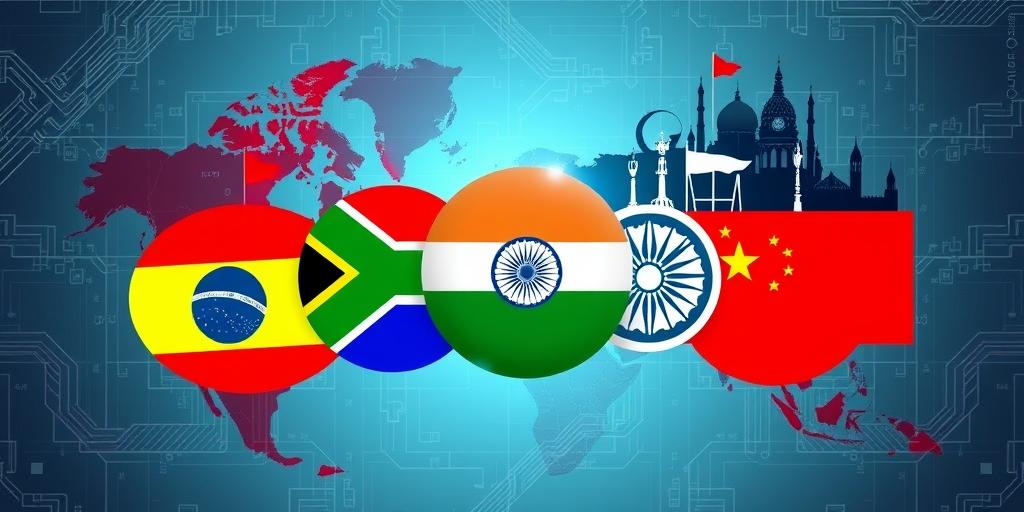
BRICS+: A New Bloc Challenging Western Dominance in Global Governance?
In an evolving global landscape, the emergence of BRICS+ represents a notable shift in international relations and global governance. Originally founded in 2009 as BRIC, with the addition of South Africa in 2010 to become BRICS, this bloc of nations—Brazil, Russia, India, China, and South Africa—has steadily grown in influence. With the recent expansion to include new members, BRICS+ aims to reshape the existing world order and challenge the long-standing dominance of Western powers.
Understanding BRICS and Its Evolution
The BRICS nations collectively account for a significant portion of the world's population and GDP. Their initial formation was driven by a shared desire to foster greater economic cooperation and promote a more multipolar world. Over the years, BRICS has evolved from a mere economic alliance to a more comprehensive strategic partnership, addressing issues ranging from trade and finance to security and sustainable development.
The expansion to BRICS+ marks a pivotal moment. By incorporating new member states, the bloc seeks to amplify its voice on the global stage and enhance its capacity to address pressing global challenges. The inclusion of countries with diverse economic and political systems underscores the intent to build a more inclusive and representative international framework.
Objectives and Priorities of BRICS+
The primary objectives of BRICS+ include:
- Promoting Multilateralism: Advocating for a more balanced and equitable global order, where decision-making is not concentrated in the hands of a few Western nations.
- Enhancing Economic Cooperation: Fostering trade, investment, and financial integration among member states to drive economic growth and development.
- Reforming Global Governance: Pushing for reforms in international institutions such as the United Nations, the World Bank, and the International Monetary Fund to better reflect the current geopolitical realities.
- Addressing Global Challenges: Collaborating on issues such as climate change, poverty reduction, and public health to achieve sustainable and inclusive development.
Areas of Potential Impact
The rise of BRICS+ has the potential to impact several key areas:
- Economic Landscape: Increased trade and investment flows among BRICS+ nations could lead to the development of new economic corridors and supply chains, reducing dependence on traditional Western markets.
- Financial Architecture: The New Development Bank (NDB), established by the BRICS countries, serves as an alternative to Western-dominated financial institutions, providing funding for infrastructure and sustainable development projects in emerging economies.
- Geopolitical Influence: A stronger, more cohesive BRICS+ bloc could exert greater influence in international forums, shaping global norms and policies.
Challenges and Criticisms
Despite its potential, BRICS+ faces several challenges:
- Internal Divisions: Divergent interests and priorities among member states could hinder effective cooperation and decision-making.
- Economic Disparities: Significant differences in economic development levels may create imbalances within the bloc.
- Geopolitical Tensions: Relations with Western powers could become strained as BRICS+ seeks to assert its influence.
Conclusion
BRICS+ represents a significant development in the global arena. As it continues to evolve, its ability to overcome internal challenges and navigate geopolitical complexities will determine its success in reshaping global governance. Whether it can truly challenge Western dominance remains to be seen, but its emergence signals a clear desire for a more multipolar and inclusive world order.


