
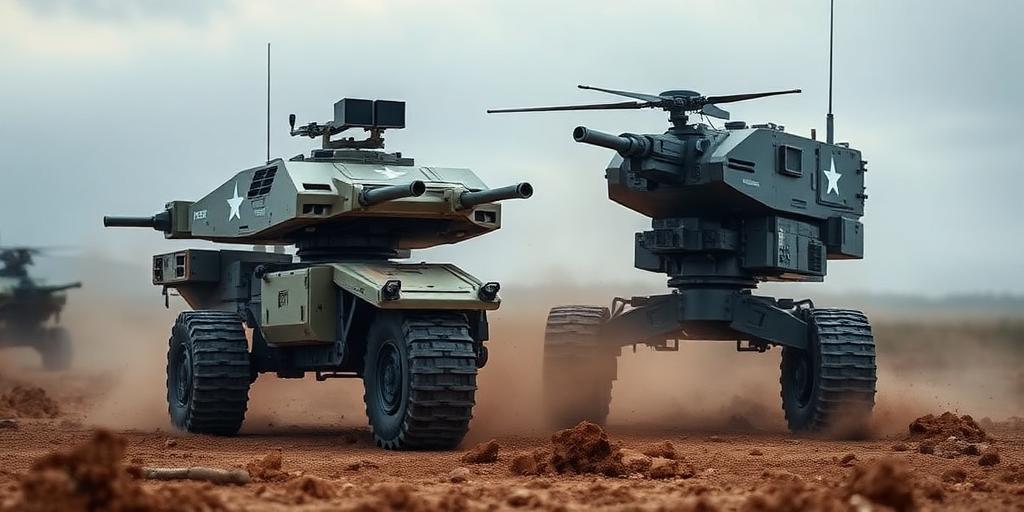
Military Robotics: How Unmanned Ground Vehicles are Changing Land Warfare
Unmanned Ground Vehicles (UGVs), or military robots, are revolutionizing land warfare. These robots are designed to operate on the ground without a human presence, and they are being used for a wide range of military operations. From reconnaissance to combat support, UGVs enhance mission effectiveness while reducing risks to human soldiers.
What are Unmanned Ground Vehicles?
UGVs are essentially robots on wheels or tracks. They can be remotely controlled by a human operator or programmed to operate autonomously. UGVs are equipped with various sensors, cameras, and other technologies that allow them to navigate complex terrain, detect threats, and perform tasks.
Key Capabilities of Military Robotics
- Reconnaissance and Surveillance: UGVs can be sent into dangerous or inaccessible areas to gather intelligence without putting soldiers at risk. Their sensors and cameras provide real-time information about the battlefield.
- Explosive Ordnance Disposal (EOD): UGVs are used to detect, identify, and disarm explosive devices. This reduces the risk to EOD personnel.
- Combat Support: UGVs can provide fire support, transport supplies, and evacuate casualties. This frees up soldiers to focus on other tasks.
- Security: UGVs can patrol borders, military bases, and other sensitive areas. They can detect intruders and provide early warning of potential threats.
Advantages of Using UGVs in Land Warfare
- Reduced Risk to Soldiers: UGVs can perform dangerous tasks without putting soldiers in harm's way.
- Increased Mission Effectiveness: UGVs can operate in all types of terrain and weather conditions, and they can work around the clock.
- Improved Situational Awareness: UGVs provide real-time information about the battlefield, which can help commanders make better decisions.
- Cost Savings: UGVs can reduce the need for human soldiers, which can save money on training, equipment, and personnel costs.
Challenges of Using UGVs in Land Warfare
- Technical Issues: UGVs are complex machines that can be prone to technical problems.
- Communication Issues: UGVs rely on communication with a human operator or base station. If communication is lost, the UGV may become inoperable.
- Ethical Concerns: There are ethical concerns about the use of UGVs in warfare, particularly with regards to autonomous weapons systems.
The Future of Military Robotics
The use of UGVs in land warfare is expected to continue to grow in the coming years. As technology advances, UGVs will become more sophisticated and capable. They will be used for an even wider range of military operations, and they will play an increasingly important role in shaping the future of warfare. The integration of artificial intelligence (AI) will enable UGVs to operate more autonomously, making decisions on the battlefield with minimal human intervention. This shift promises increased efficiency and reduced human risk, but also raises significant ethical questions that need careful consideration.
Conclusion
Unmanned Ground Vehicles are transforming land warfare by providing enhanced capabilities, reducing risks to soldiers, and improving overall mission effectiveness. While there are challenges to overcome, the advantages of using UGVs are clear, and their role in military operations will only continue to expand. As technology evolves, UGVs will become more sophisticated, more autonomous, and more integral to the modern battlefield.


