
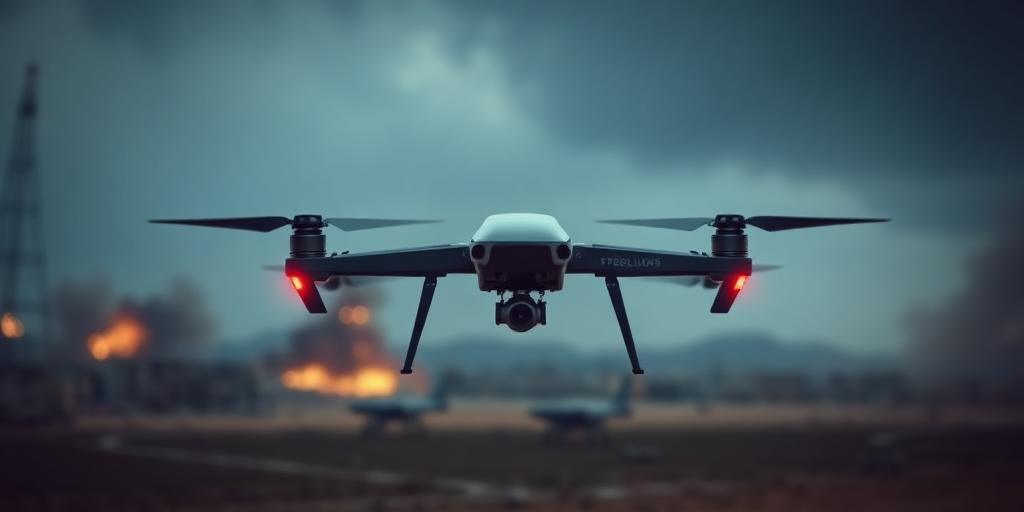
Loitering Munitions: The Rise of "Suicide Drones" in Modern Conflicts
Loitering munitions, often referred to as "suicide drones," are increasingly prevalent in modern warfare. These unmanned aerial vehicles (UAVs) combine the characteristics of drones and missiles, offering a unique capability for reconnaissance and targeted strikes. This article delves into the technology, applications, and implications of loitering munitions in contemporary conflicts.
What are Loitering Munitions?
Loitering munitions are designed to patrol an area, identify targets, and then strike those targets with a self-contained warhead. Unlike traditional drones that require constant operator control, loitering munitions can autonomously search for and engage targets based on pre-programmed parameters. They fill a critical gap between conventional drones, which may lack offensive capabilities, and missiles, which are typically single-use and less flexible.
Key characteristics of loitering munitions include:
- Extended Loiter Time: Capable of remaining airborne for hours, allowing for persistent surveillance.
- Target Identification: Equipped with sensors and software to identify and classify potential targets.
- Precision Strike: Delivers a warhead with accuracy, minimizing collateral damage.
- Autonomous Operation: Operates with minimal human intervention, enhancing operational efficiency.
- Cost-Effectiveness: Generally less expensive than deploying manned aircraft or launching traditional missiles.
Applications in Modern Conflicts
Loitering munitions have seen increasing use in various conflicts around the world. Their versatility makes them suitable for a range of missions, including:
- Suppression of Enemy Air Defenses (SEAD): Targeting radar systems and anti-aircraft batteries.
- Reconnaissance and Surveillance: Providing real-time intelligence on enemy positions and movements.
- Targeted Killings: Engaging high-value targets with precision.
- Asymmetric Warfare: Offering a cost-effective means for non-state actors to challenge conventional military forces.
The use of loitering munitions was prominently observed in the Nagorno-Karabakh conflict in 2020, where Azerbaijan effectively employed these weapons against Armenian forces. Their impact highlighted the potential of loitering munitions to alter the dynamics of modern warfare.
Ethical and Strategic Implications
The rise of loitering munitions raises several ethical and strategic concerns:
- Autonomous Targeting: The ability of these weapons to select and engage targets autonomously raises questions about accountability and the potential for unintended consequences.
- Proliferation: The relatively low cost and ease of production make loitering munitions accessible to a wide range of actors, including non-state groups, increasing the risk of their misuse.
- Escalation: The use of loitering munitions can escalate conflicts by lowering the threshold for lethal force.
- Legal Ambiguity: Current international laws may not adequately address the unique characteristics and risks posed by loitering munitions, leading to legal ambiguity in their deployment.
Technological Advancements
Ongoing advancements in technology are further enhancing the capabilities of loitering munitions. These include:
- Improved Sensors: Higher resolution cameras and advanced radar systems for better target identification.
- Artificial Intelligence: AI-powered algorithms for autonomous navigation and target selection.
- Swarming Technology: The ability to deploy multiple loitering munitions simultaneously, overwhelming enemy defenses.
- Enhanced Range and Endurance: Longer flight times and greater operational ranges.
Conclusion
Loitering munitions represent a significant evolution in military technology, offering unprecedented capabilities for reconnaissance and targeted strikes. As these weapons become more sophisticated and widely available, it is crucial to address the ethical, strategic, and legal implications of their use. Understanding the technology and its potential impact is essential for policymakers, military strategists, and the international community to navigate the evolving landscape of modern conflicts effectively.


