
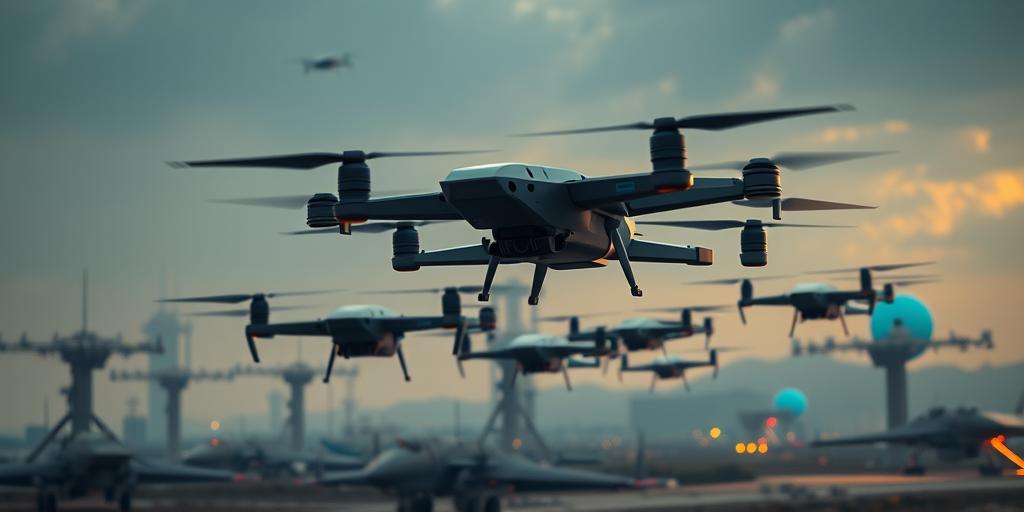
Drone Swarm Technology: The Future of Overwhelming Air Defenses
The concept of drone swarms has rapidly evolved from science fiction to a tangible reality, holding the potential to revolutionize numerous sectors, particularly in military applications. This article delves into the intricacies of drone swarm technology, its operational mechanics, strategic advantages, and the challenges it poses to existing air defense systems.
Understanding Drone Swarm Technology
Drone swarms involve the deployment of numerous unmanned aerial vehicles (UAVs) that operate collaboratively under a centralized command or through a decentralized, self-organizing system. These drones are typically smaller, less expensive, and equipped with advanced sensors, communication tools, and varying payloads depending on their mission objectives. The key to their effectiveness lies in their ability to act in concert, overwhelming targets through sheer numbers and coordinated actions.
Operational Mechanics
- Centralized Command: In this model, a central control unit directs the entire swarm, assigning tasks, coordinating movements, and processing data collected by the drones. This approach allows for precise control but is vulnerable to disruption if the central unit is compromised.
- Decentralized, Self-Organizing System: This involves drones that communicate and coordinate with each other autonomously, using algorithms and AI to make collective decisions. This system is more resilient as it does not rely on a single point of failure but can be more complex to manage and predict.
Strategic Advantages
- Overwhelming Air Defenses: A large swarm can saturate and exhaust enemy air defenses, making it difficult for traditional systems to effectively counter the threat. The sheer number of targets can overwhelm radar systems and interceptor resources.
- Cost-Effectiveness: Deploying a swarm of relatively inexpensive drones can be more economically viable than using traditional, high-value military assets for certain missions.
- Enhanced Surveillance: Drones equipped with advanced sensors can provide continuous, wide-area surveillance, gathering critical intelligence and monitoring enemy activities.
- Mission Flexibility: Drone swarms can be adapted for a variety of missions, including reconnaissance, electronic warfare, and targeted strikes, providing significant operational flexibility.
Challenges to Air Defense Systems
Traditional air defense systems are designed to engage with a limited number of high-value targets, such as aircraft and missiles. Drone swarms present several challenges that require innovative countermeasures:
- Detection and Tracking: Identifying and tracking numerous small drones can be challenging for radar systems, especially when they operate at low altitudes or in cluttered environments.
- Interception: Engaging a large number of targets simultaneously can strain interceptor resources, making it difficult to neutralize the entire swarm.
- Discrimination: Distinguishing between hostile and friendly drones, or non-combatant UAVs, can be problematic, potentially leading to unintended engagements.
Future Implications
Drone swarm technology is poised to become an integral part of modern warfare, necessitating advancements in air defense systems to effectively counter this emerging threat. Future countermeasures may include:
- Directed Energy Weapons: Lasers and high-powered microwave weapons offer the potential to engage multiple targets rapidly and cost-effectively.
- Advanced Radar Systems: Radar systems capable of detecting and tracking small, low-flying objects will be essential for early warning and target identification.
- Cyber Warfare Capabilities: Disrupting the communication and control systems of drone swarms through cyberattacks could neutralize their effectiveness.
- AI-Powered Defense Systems: Artificial intelligence can be used to automate threat assessment and response, enabling faster and more effective engagement of drone swarms.
Conclusion
Drone swarm technology represents a significant evolution in aerial warfare, offering numerous strategic advantages while posing substantial challenges to traditional air defense systems. As this technology continues to advance, it will be crucial for military strategists and engineers to develop innovative countermeasures to maintain a robust and effective defense against this evolving threat. Understanding and adapting to the capabilities of drone swarms will be essential for ensuring national security in the future.


