
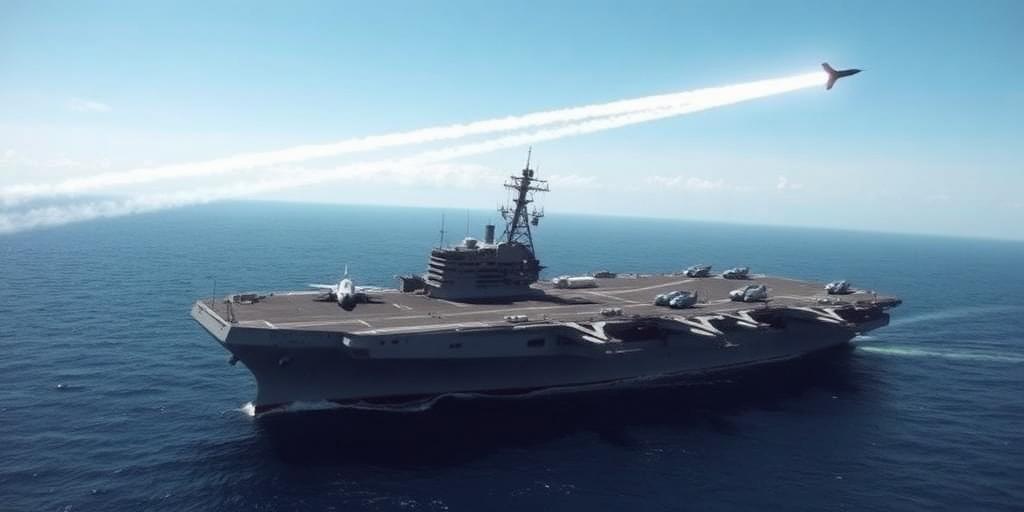
Are Aircraft Carriers Becoming Obsolete in the Age of Anti-Ship Missiles?
For decades, the aircraft carrier has been the undisputed queen of naval power, projecting force across the globe and serving as a symbol of national strength. However, the rise of advanced anti-ship missiles is prompting serious questions about the future of these expensive and strategically vital assets. Are aircraft carriers becoming obsolete in a world where a single missile strike could cripple or sink them?
The Growing Threat of Anti-Ship Missiles
Anti-ship missiles (ASMs) have evolved significantly in recent years. Modern ASMs are now faster, more maneuverable, and equipped with sophisticated guidance systems that make them exceedingly difficult to intercept. Some notable advancements include:
- Hypersonic Speed: Missiles like the Russian Zircon can travel at hypersonic speeds (Mach 5+), drastically reducing the time for defensive systems to react.
- Advanced Guidance Systems: Many ASMs use a combination of inertial navigation, GPS, and radar or infrared homing to precisely target their mark, even in adverse weather conditions or heavy electronic warfare environments.
- Sea-Skimming Capabilities: Some missiles are designed to fly just above the sea surface, making them harder to detect and intercept by radar.
- Saturation Attacks: Coordinated volleys of multiple missiles can overwhelm a carrier's defenses, increasing the likelihood of a successful strike.
These advancements pose a significant threat to aircraft carriers, which are large, high-value targets that are difficult to conceal.
The Vulnerabilities of Aircraft Carriers
Despite their formidable defenses, aircraft carriers have inherent vulnerabilities:
- Size: Their sheer size makes them easy to detect and track, even at long ranges.
- Concentrated Value: A single carrier represents a massive concentration of military power and investment. Losing one would be a significant strategic blow.
- Limited Defenses: While carriers are equipped with advanced air defense systems, electronic warfare capabilities, and close-in weapon systems (CIWS), these defenses are not impenetrable. A determined and well-coordinated attack could overwhelm them.
Arguments for the Continued Relevance of Aircraft Carriers
Despite the growing threat of ASMs, proponents of aircraft carriers argue that they remain essential for several reasons:
- Power Projection: Aircraft carriers provide a mobile, self-contained platform for projecting air power anywhere in the world. They can rapidly respond to crises, conduct strike operations, and provide humanitarian assistance.
- Deterrence: The presence of a carrier strike group can deter potential adversaries and reassure allies.
- Flexibility: Carriers can support a wide range of missions, from air defense and anti-submarine warfare to intelligence gathering and special operations.
- Technological Advancements: The U.S. Navy and other leading navies are constantly developing new technologies to improve carrier defenses, including advanced radar systems, directed energy weapons, and improved electronic warfare capabilities.
Adapting to the Evolving Threat Landscape
To remain relevant in the age of anti-ship missiles, aircraft carriers must adapt to the evolving threat landscape. Some potential strategies include:
- Increased Stand-off Range: Developing and deploying longer-range aircraft and missiles to strike targets from beyond the reach of enemy ASMs.
- Enhanced Defensive Systems: Investing in more advanced air defense systems, including laser weapons and railguns, to intercept incoming missiles.
- Improved Electronic Warfare Capabilities: Developing more effective electronic warfare systems to jam or spoof enemy missile guidance systems.
- Distributed Operations: Dispersing carrier strike groups over a wider area to reduce their vulnerability to attack.
- Unmanned Systems: Integrating unmanned aircraft and surface vessels into carrier strike groups to perform reconnaissance, electronic warfare, and even strike missions.
Conclusion
The debate over the future of aircraft carriers in the face of increasingly capable anti-ship missiles is complex and ongoing. While the threat posed by ASMs is real and growing, aircraft carriers continue to offer unique capabilities that are difficult to replicate. By adapting to the evolving threat landscape and investing in new technologies, aircraft carriers can remain a relevant and vital component of naval power for years to come.


