
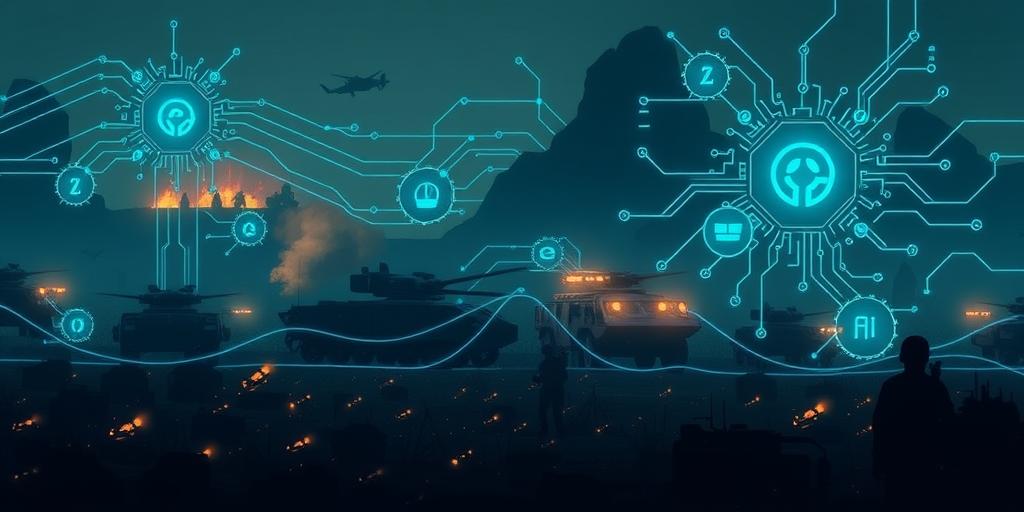
AI on the Modern Battlefield: Autonomous Weapons and Ethical Dilemmas
The integration of Artificial Intelligence (AI) into military technology has led to the development of autonomous weapons systems (AWS), sparking intense debate about their ethical implications and potential impact on the future of warfare. This article aims to provide an informative overview of AI's role in modern combat, focusing on the capabilities and challenges of AWS and the complex ethical dilemmas they present.
What are Autonomous Weapons Systems?
Autonomous weapons systems, sometimes referred to as "killer robots," are weapons that can independently select and engage targets without human intervention. These systems use AI algorithms, machine learning, and advanced sensor technology to operate in complex environments, making decisions that were previously the exclusive domain of human soldiers.
Key Capabilities of AI in Warfare:
- Enhanced Target Recognition: AI algorithms can quickly analyze vast amounts of data from various sensors to identify and classify targets with greater accuracy than humans.
- Improved Decision-Making: AWS can process information and react faster than humans, potentially leading to more effective and efficient combat strategies.
- Reduced Risk to Soldiers: By automating dangerous tasks, AWS can reduce the number of human soldiers exposed to combat situations, minimizing casualties.
- Increased Precision: AI-guided systems can deliver more precise strikes, reducing collateral damage and civilian casualties (in theory).
Ethical Dilemmas:
- Accountability: One of the most significant concerns is establishing accountability when AWS make lethal errors. Who is responsible when an autonomous weapon kills a civilian? The programmer? The commanding officer? Or the weapon itself?
- Bias and Discrimination: AI algorithms are trained on data, and if that data reflects existing biases, the AWS may perpetuate or even amplify those biases, leading to discriminatory targeting.
- Lack of Human Judgment: Critics argue that AWS lack the human judgment and empathy necessary to make life-or-death decisions on the battlefield. Machines cannot distinguish between combatants and civilians or understand the context of a situation.
- Escalation Risk: The deployment of AWS could lead to a rapid escalation of conflicts, as machines can react faster than humans, potentially triggering unintended consequences.
The Debate Around Regulation:
The development and deployment of AWS have sparked a global debate about the need for regulation. Some advocate for a complete ban on autonomous weapons, arguing that they are inherently unethical and pose an unacceptable risk to humanity. Others believe that AWS can be developed and used responsibly, provided that strict regulations and safeguards are in place.
Several international organizations and governments are working to establish guidelines and treaties to govern the use of AI in warfare. However, reaching a consensus on these issues remains a significant challenge, given the diverging interests and perspectives of different nations.
The Future of AI in Warfare:
AI is poised to play an increasingly prominent role in military operations. As technology advances, AWS are likely to become more sophisticated and capable. It is crucial for policymakers, researchers, and the public to engage in informed discussions about the ethical, legal, and strategic implications of AI in warfare to ensure that these powerful technologies are used responsibly and in accordance with humanitarian principles.
Conclusion:
The integration of AI into the modern battlefield presents both opportunities and challenges. While autonomous weapons systems offer the potential to enhance military capabilities and reduce risks to soldiers, they also raise profound ethical questions about accountability, bias, and the value of human judgment. Navigating these complex issues will require careful consideration, international cooperation, and a commitment to ensuring that AI serves humanity's best interests, even in times of conflict.


