
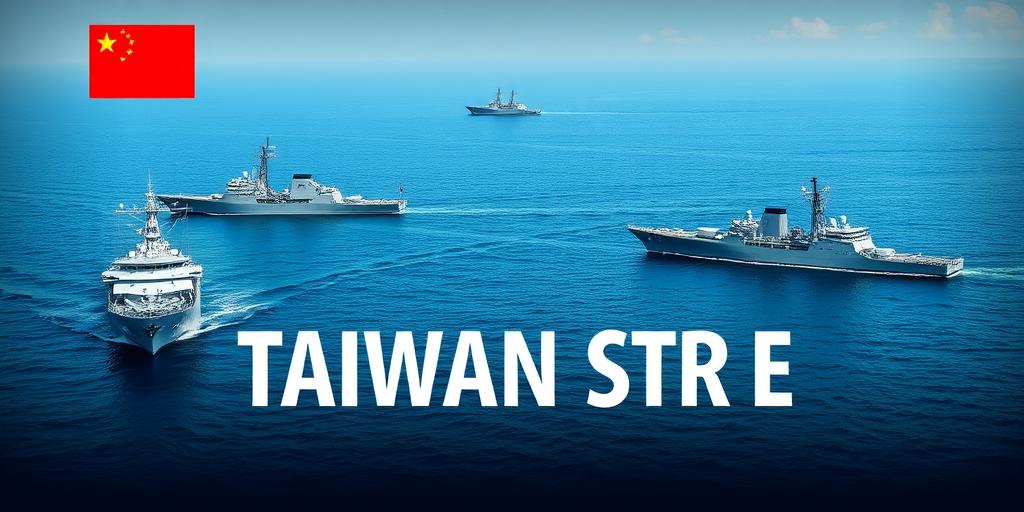
Taiwan Strait Flashpoint: Analyzing China's Naval Drills and US Responses
The Taiwan Strait remains a focal point of geopolitical tension, with recent Chinese naval drills and subsequent responses from the United States adding complexity to an already delicate situation. This analysis aims to provide an informative overview of the events, their potential implications, and the perspectives of the key actors involved.
Recent Events: China's Naval Drills
In [Date of Drills], the People's Liberation Army Navy (PLAN) conducted a series of extensive naval exercises in the Taiwan Strait. These drills involved a significant number of warships, aircraft, and advanced military hardware. The exercises were framed by China as a response to [Specific Trigger, e.g., increased US-Taiwan interaction, remarks by Taiwanese officials]. Key aspects of the drills included:
- Scale and Scope: The exercises encompassed a wide area of the Taiwan Strait, simulating various combat scenarios.
- Military Hardware: Reports indicated the involvement of advanced destroyers, frigates, and fighter jets, showcasing China's growing military capabilities.
- Messaging: Chinese state media emphasized the drills as a demonstration of resolve and a warning against what China views as separatist activities in Taiwan.
US Response and Involvement
The United States has consistently maintained a policy of "strategic ambiguity" regarding its defense commitment to Taiwan. In response to the Chinese naval drills, the US has undertaken several actions:
- Naval Presence: The US Navy has increased its presence in the region, conducting freedom of navigation operations (FONOPs) in the South China Sea and Taiwan Strait. These operations are intended to signal US commitment to maintaining open sea lanes and challenging China's territorial claims.
- Diplomatic Statements: US officials have reiterated their support for Taiwan and condemned China's coercive actions. They have also called for a peaceful resolution of cross-strait differences.
- Military Aid to Taiwan: The US has continued to provide military assistance to Taiwan, including the sale of advanced weaponry, aimed at bolstering Taiwan's self-defense capabilities.
Perspectives and Interpretations
- China: Views Taiwan as a renegade province and considers reunification a national priority. China perceives US involvement in the region as interference in its internal affairs and a challenge to its sovereignty.
- United States: Sees Taiwan as a key democratic partner in the Indo-Pacific region and is committed to maintaining stability in the area. The US aims to deter China from using force against Taiwan while avoiding actions that could escalate tensions.
- Taiwan: Seeks to maintain its de facto independence and strengthen its relationship with the United States and other democratic countries. Taiwan views China's military activities as a direct threat to its security and stability.
Potential Implications and Future Outlook
The situation in the Taiwan Strait carries significant risks of miscalculation and escalation. Several factors could influence future developments:
- US-China Relations: The overall state of US-China relations will continue to play a critical role. Increased competition and tensions between the two countries could exacerbate the situation in the Taiwan Strait.
- Taiwan's Domestic Politics: Political developments in Taiwan, including future elections and shifts in public opinion, could affect cross-strait relations.
- Regional Dynamics: The actions and policies of other regional actors, such as Japan, Australia, and South Korea, could also influence the dynamics in the Taiwan Strait.
Conclusion
The Taiwan Strait remains a complex and volatile region. Understanding the perspectives of the key actors, the nature of military activities, and the potential implications is crucial for navigating this sensitive geopolitical landscape. Continued diplomatic efforts and a commitment to peaceful resolution are essential to preventing further escalation and maintaining stability in the region. This analysis serves as a starting point for further investigation and informed discussion on this critical issue.


