
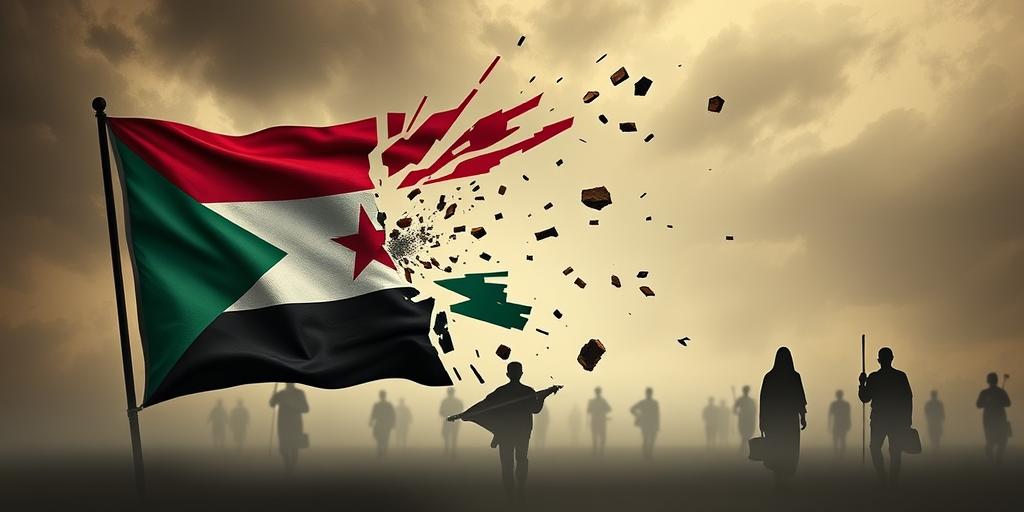
Sudan, a nation already burdened by political instability and economic hardship, is currently embroiled in a devastating conflict that threatens to destabilize the entire region. The clashes between the Sudanese Armed Forces (SAF), led by General Abdel Fattah al-Burhan, and the Rapid Support Forces (RSF), commanded by General Mohamed Hamdan Dagalo (Hemedti), have plunged the country into chaos. This article will delve into the roots of the conflict, the humanitarian crisis it has spawned, and the potential for regional spillover.
Roots of the Conflict The current crisis is not a spontaneous eruption of violence but rather the culmination of long-standing tensions between the SAF and the RSF. The RSF, originally a paramilitary group known as the Janjaweed militia, gained notoriety for its brutal suppression of the Darfur conflict in the early 2000s. Over time, it evolved into a powerful independent force, often operating outside the direct control of the Sudanese military. The two generals, al-Burhan and Hemedti, initially joined forces to overthrow the civilian government in a 2021 coup. However, their alliance proved to be short-lived, as disagreements over the integration of the RSF into the SAF and the future political direction of Sudan escalated into open conflict.
Humanitarian Crisis The fighting has had a catastrophic impact on the civilian population. Thousands have been killed or injured, and millions have been displaced from their homes. Hospitals and other essential services have been overwhelmed, and access to food, water, and medical care is severely limited. The United Nations estimates that the number of refugees fleeing Sudan could reach over a million, placing immense strain on neighboring countries. The humanitarian situation is further compounded by the fact that Sudan already hosted a large number of refugees from other conflict-affected countries in the region.
Regional Spillover The conflict in Sudan has the potential to destabilize the entire region. Sudan shares borders with several countries, including Egypt, Chad, South Sudan, Ethiopia, and Eritrea, many of which are already grappling with their own political and economic challenges. The influx of refugees could overwhelm the resources of these countries and exacerbate existing tensions. Moreover, the conflict could embolden armed groups and criminal networks operating in the region, leading to increased cross-border violence and illicit trafficking. There are concerns that the fighting could also disrupt vital trade routes and energy supplies, further undermining regional stability.
International Response The international community has condemned the violence and called for an immediate ceasefire. However, diplomatic efforts to mediate a resolution to the conflict have so far been unsuccessful. The African Union, the United Nations, and various countries have been working to facilitate dialogue between the warring parties, but the deep-seated distrust and animosity between al-Burhan and Hemedti make it difficult to achieve a lasting peace. The international community faces the challenge of providing humanitarian assistance to those in need while also pressuring the warring parties to end the violence and engage in meaningful negotiations.
Conclusion Sudan's descent into chaos is a tragedy with far-reaching consequences. The conflict between the SAF and the RSF has created a humanitarian crisis, displaced millions of people, and threatens to destabilize the entire region. A concerted effort by the international community is needed to bring an end to the violence, provide humanitarian assistance, and support a peaceful transition to a civilian-led government. The future of Sudan, and indeed the stability of the region, depends on it.


