
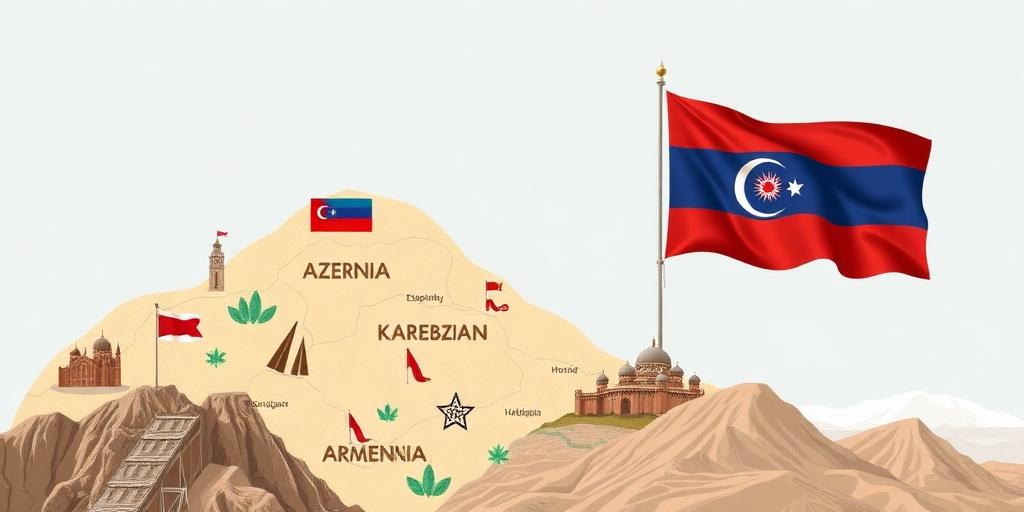
The Nagorno-Karabakh region has been a point of contention between Armenia and Azerbaijan for decades, marked by periods of intense conflict and uneasy ceasefires. Recent developments have significantly altered the geopolitical landscape, necessitating a thorough assessment of Azerbaijan's gains and Armenia's predicament.
Azerbaijan's Gains
Militarily, Azerbaijan has made substantial gains, reclaiming territories previously held by Armenian forces. This was achieved through a combination of advanced military technology, strategic planning, and international support. The recapture of Shusha, a city of significant cultural and strategic importance, marked a turning point in the conflict.
Diplomatically, Azerbaijan has strengthened its position by securing support from key regional players. Turkey's backing has been particularly crucial, providing both military and political assistance. Furthermore, Azerbaijan has successfully leveraged its energy resources to foster relationships with European countries, enhancing its international standing.
Economically, regaining control over key territories has allowed Azerbaijan to exploit natural resources and establish new trade routes. The restoration of infrastructure and the resettlement of displaced populations are now priorities, which, if successful, will further solidify Azerbaijan's position.
Armenia's Predicament
Armenia faces a complex set of challenges in the aftermath of the conflict. Militarily, the loss of territory and the weakening of its armed forces have created a sense of vulnerability. Rebuilding military capabilities and securing borders are immediate concerns.
Diplomatically, Armenia's traditional alliances have been tested. While Russia remains a key ally, its response to the conflict has been perceived as lukewarm, leading to questions about the reliability of its security guarantees. Armenia must now diversify its diplomatic efforts and seek broader international support.
Economically, the loss of control over Nagorno-Karabakh has exacerbated existing economic challenges. The influx of refugees and the need for reconstruction have strained resources. Armenia must implement economic reforms and attract foreign investment to stabilize its economy.
The Stalemate and Future Prospects
Despite Azerbaijan's gains, a complete resolution to the conflict remains elusive. The status of Nagorno-Karabakh and the rights of its Armenian population are still contentious issues. International mediation efforts are ongoing, but a lasting peace agreement will require compromise and mutual recognition.
The involvement of regional powers further complicates the situation. Turkey's support for Azerbaijan and Russia's role as a mediator create a complex dynamic that must be carefully managed. The potential for renewed conflict remains, underscoring the need for sustained diplomatic efforts.
In conclusion, the Nagorno-Karabakh stalemate reflects a shifting balance of power in the region. Azerbaijan has made significant gains, while Armenia faces considerable challenges. A lasting resolution will depend on addressing the underlying issues and fostering a climate of trust and cooperation.


