
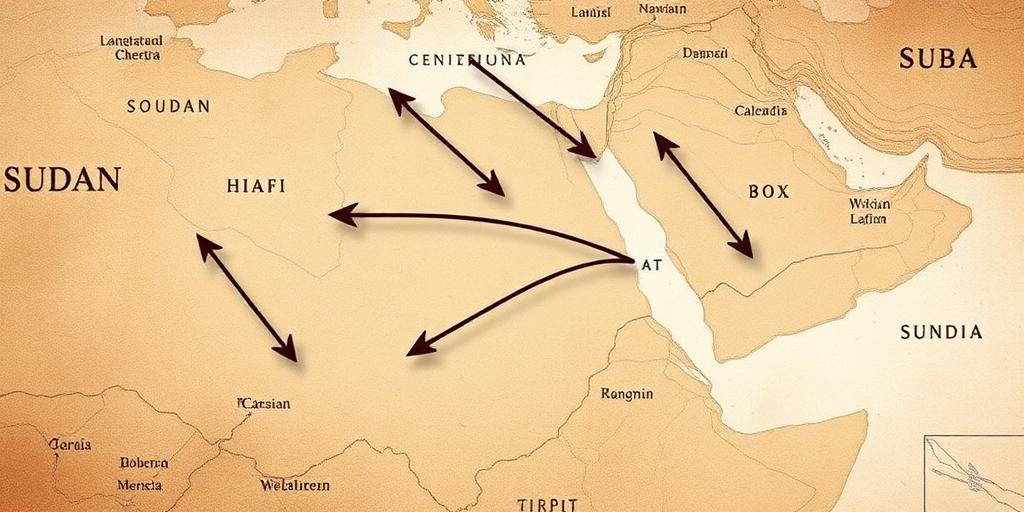
Sudan's ongoing conflict has been exacerbated by the involvement of external actors, each vying for influence and access to the country's resources. Understanding who is arming whom is crucial to comprehending the dynamics of the conflict and the prospects for peace. This post provides an overview of the main external players and their roles in fueling the crisis.
Regional Powers: Several regional powers have been implicated in providing support to the warring factions.
- Egypt: Historically, Egypt has maintained close ties with the Sudanese military. There are reports suggesting continued support for the Sudanese Armed Forces (SAF) led by General Abdel Fattah al-Burhan. This support is likely aimed at preserving Egypt's influence in the region and preventing instability along its southern border.
- United Arab Emirates (UAE): The UAE has been accused of backing the Rapid Support Forces (RSF) commanded by General Mohamed Hamdan Dagalo, also known as Hemedti. Allegations include the provision of weapons, training, and financial support. The UAE's involvement is seen as part of its broader strategy to expand its influence in the Horn of Africa and the Red Sea region.
- Saudi Arabia: Saudi Arabia's role is more nuanced. While it has officially called for a ceasefire and supported diplomatic efforts, there are concerns that its financial ties with both the SAF and RSF may indirectly contribute to the conflict. The kingdom's primary interest is to maintain stability in the region and prevent the spread of extremism.
Global Powers: Major global powers also have a stake in Sudan's conflict, though their involvement is often less direct.
- Russia: Russia has been expanding its influence in Africa, and Sudan is no exception. The Wagner Group, a Russian private military company, has reportedly been involved in supporting the RSF, particularly in the gold mining sector. Russia's interest lies in gaining access to Sudan's natural resources and establishing a foothold in the Red Sea.
- United States: The United States has been primarily focused on diplomatic efforts to mediate the conflict and provide humanitarian assistance. However, its ability to influence the situation is limited by its strained relationship with both the SAF and RSF. The US is concerned about the potential for the conflict to destabilize the region and create a breeding ground for terrorism.
Other Actors: Besides the major regional and global powers, other actors play a role in the conflict.
- Chad and Libya: These neighboring countries have been used as transit routes for weapons and fighters. The porous borders and weak security structures make it difficult to control the flow of arms and personnel.
- Rebel Groups: Various rebel groups operating in Sudan's periphery have also been drawn into the conflict, often aligning themselves with either the SAF or RSF in exchange for support or resources.
Conclusion: The involvement of external actors in Sudan's conflict has created a complex and dangerous situation. The provision of arms and support to the warring factions has fueled the violence and undermined efforts to find a peaceful resolution. Addressing the external dimensions of the conflict is essential for achieving a lasting peace in Sudan. This requires a concerted effort by regional and international actors to halt the flow of weapons, promote dialogue, and support a transition to civilian rule.


