
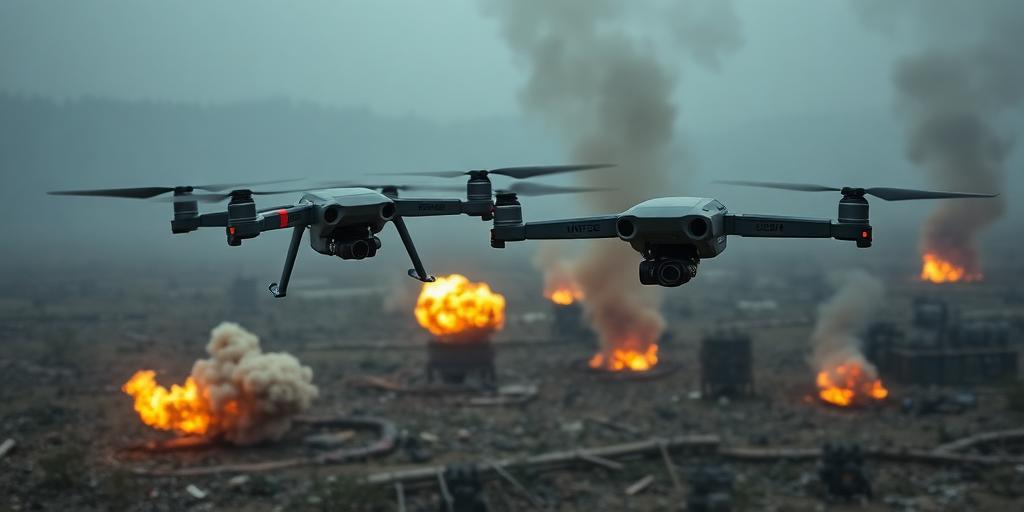
Drone Duels Over Ukraine: Innovations in Unmanned Aerial Warfare
The conflict in Ukraine has become a proving ground for modern warfare, with unmanned aerial vehicles (UAVs), commonly known as drones, playing a pivotal role. This article examines the innovative uses of drones in the conflict, their impact on military strategy, and the evolving technological landscape of unmanned aerial warfare.
The Rise of Drones in Modern Conflict
Drones have transformed military operations due to their versatility, cost-effectiveness, and reduced risk to human soldiers. In Ukraine, drones are used for:
- Reconnaissance: Providing real-time intelligence on enemy positions and movements.
- Targeting: Identifying and designating targets for artillery and missile strikes.
- Direct Attack: Deploying explosives to engage enemy forces and equipment.
- Electronic Warfare: Disrupting enemy communications and drone operations.
- Logistics: Delivering supplies to front-line troops.
Key Innovations in Drone Technology
The war in Ukraine has accelerated the development and deployment of several key drone technologies:
First-Person View (FPV) Drones: These drones provide operators with an immersive, real-time view from the drone's perspective, enhancing precision in targeting and attack missions. FPV drones are often modified by Ukrainian and Russian forces to carry explosives, turning them into effective kamikaze drones.
AI-Powered Drones: Artificial intelligence is being integrated into drone systems to enable autonomous navigation, object recognition, and decision-making. AI-powered drones can identify and track targets with minimal human input, increasing operational efficiency.
Anti-Drone Systems: As drones become more prevalent, countermeasures to neutralize them are also advancing. Electronic warfare systems, drone-catching nets, and laser weapons are being deployed to counter enemy drone operations.
Drone Swarms: The coordinated deployment of multiple drones to overwhelm enemy defenses is an emerging tactic. Drone swarms can conduct reconnaissance, saturate air defenses, and deliver coordinated attacks.
Impact on Military Strategy
The widespread use of drones in Ukraine has significantly impacted military strategy:
- Increased Situational Awareness: Drones provide a continuous flow of intelligence, giving commanders a more comprehensive understanding of the battlefield.
- Enhanced Precision Targeting: Drones enable precise targeting, reducing collateral damage and increasing the effectiveness of strikes.
- Asymmetric Warfare: Drones allow smaller, less technologically advanced forces to challenge larger, better-equipped adversaries.
- Psychological Warfare: The constant presence of drones overhead can have a demoralizing effect on enemy troops.
Challenges and Future Trends
Despite their advantages, the use of drones in warfare presents several challenges:
- Vulnerability to Countermeasures: Drones can be shot down, jammed, or hacked, limiting their effectiveness.
- Ethical Concerns: The use of autonomous weapons systems raises ethical questions about accountability and the potential for unintended consequences.
- Regulatory Issues: The proliferation of drones raises concerns about airspace management and security.
Looking ahead, the use of drones in warfare is likely to continue to evolve. Future trends include:
- Increased Autonomy: Drones will become more autonomous, capable of operating with minimal human intervention.
- Integration with Other Technologies: Drones will be integrated with other advanced technologies, such as AI, robotics, and cyber warfare.
- Proliferation: Drones will become more widely available, increasing the risk of their use by non-state actors.
Conclusion
The conflict in Ukraine has demonstrated the transformative potential of drones in modern warfare. As drone technology continues to advance, it is essential to consider the ethical, legal, and strategic implications of their use. The future of warfare will undoubtedly be shaped by the ongoing innovations in unmanned aerial systems.


